
Developer public art
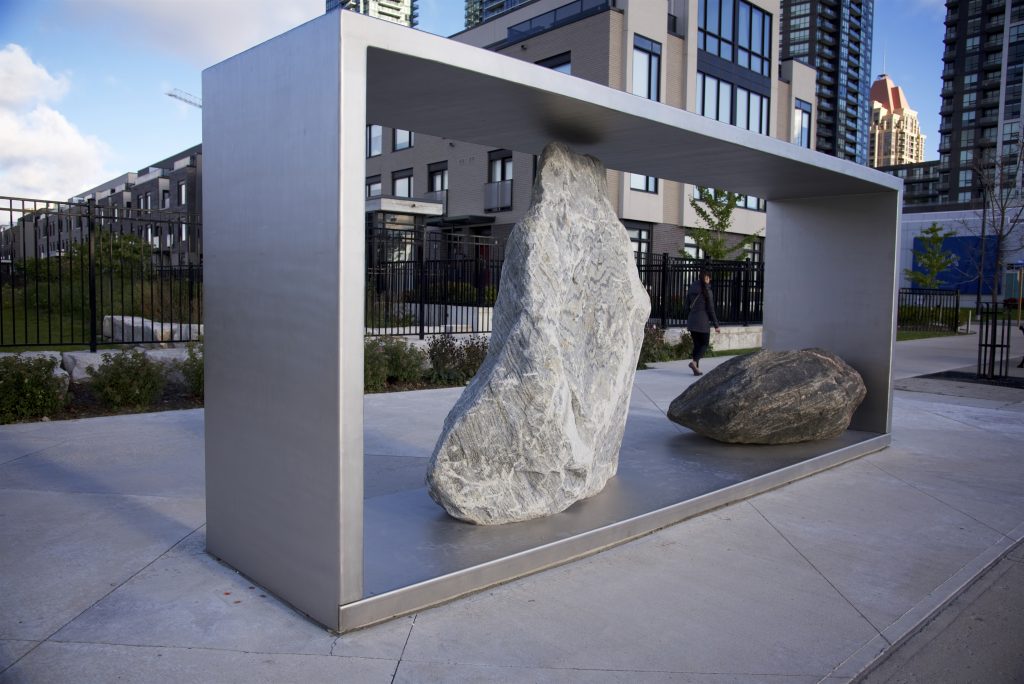
Public art contributes to building strong communities and developing Mississauga’s unique identity. For new development projects, integrating public art can help to:
- create an enriched environment that people will want to live in and return to (studies have shown that people are 50% more likely to spend time in spaces with creative placemaking)
- create a distinct sense of place at your property
- support economic vibrancy, safety and neighbourhood revitalization
Learn how the Developer Public Art Program works, including when and how to incorporate public art into development projects.
When should public art be included in development projects?
The City of Mississauga Official Plan 2051 encourages development proponents to incorporate a public art contribution as part of their overall vision for their property. Developers are encouraged to assign between 0.5% to 2% of the site’s construction value to public art.
To understand whether public art makes sense for your development site, consider:
- Project Size: Does the total gross floor area exceed 10,000 square metres?
- Priority Zones: Is the location within or close to a designated public art Priority Zone?
- Visibility: Is the development site in a prominent, highly visible location for pedestrians and the general public, and within the urban landscape
- Community Impact: Is the site in an area of Mississauga that lacks public art, and/or cultural infrastructure, thereby benefiting the surrounding neighbourhood and future residents?
What is a public art Priority Zone?
The City’s Public Art Plan identifies five public art Priority Zones, which have clear rationale for when public art should be prioritized in a development project.
Infrastructure projects within Strategic Growth Areas and Major Transit Station Areas (as identified in the Mississauga Official Plan) are particularly strong candidates for public art due to their high level of visibility and access. Infrastructure projects include publicly accessible buildings, bridges, roads, and parks. For infrastructure projects that are underway, public art can include temporary art on construction hoarding.
The heritage sites priority zone includes Heritage Conservation Districts, Cultural Landscapes, and properties with heritage designations. You can check the heritage status of your property in the City’s property information database. Mississauga has three Heritage Conservation Districts and has identified 28 cultural landscapes.
Learn more about heritage properties in Mississauga
Cultural Districts are distinct, mixed-use areas that attract people because of their high concentration of cultural facilities (e.g. studios, performance venues, galleries, museums) and activities (e.g. events, shopping, dining, and public space activations). These neighbourhoods act as local cultural destinations that invite residents and visitors alike to engage in creative expression, social gathering and community building.
Learn more about cultural districts in Mississauga
Mississauga’s waterfront stretches approximately 22 km along Lake Ontario’s shoreline. With its well-travelled Waterfront Trail, public parks, natural features, and close association with the Mississaugas of the Credit First Nation, areas near the waterfront are ideal locations for public art.
Opportunities for public art at major transit hubs and corridors include existing and future large transit infrastructure projects and corridors comprised of a road right-of-way and lands on either side of the road. In addition, the City’s major active transportation routes provide environmentally responsible opportunities to integrate public art that encourages movement, sustainability and quality of life in a post-pandemic city.
Frequently asked questions
If you are interested in incorporating public art in your property, the Public Art team can work with you to determine a suitable approach. If you’re currently going through a site plan approval process and want to include public art as part of your project, please reach out to us.
Generally public art should be located in the public realm and be free for all residents and visitors to enjoy. There are typically two options for public art contributions: On-site contributions and off-site (or pooled) contributions.
On-site contribution
Developers may commission art on the development site (i.e. on private property) or publicly owned lands next to the site (i.e. on a sidewalk). Public art installed on private property should remain accessible to the public at no cost and should be clearly visible at all times from a publicly accessible area.
Public art installed on publicly owned lands adjacent to the development site will become part of the City Art Collection and will therefore be commissioned and maintained by the City’s Public Art Program.
Off-site contribution or pooled funding
In cases where an on-site location for public art may not be suitable or if the amount is too small to be effectively used to create a public art installation, the Developer may wish to direct the value of their public art contribution to the City’s Public Art Program. Funds collected will be deposited directly into the City’s Public Art Reserve Fund and spent on City-initiated public art on publicly owned lands in the local community.
The City also accepts donations to support the City Art Collection.
For information on donations of art, including but not limited to sculptures, monuments, and digital art, see the Donated Art Guidelines.
For information on monetary donations, refer to Corporate Policy and Procedure – Fundraising Campaigns and Monetary Donations to the City of Mississauga.
Public art is art that is created through a formal process, by a professional artist or in collaboration with multiple artists. It can be in any medium, including digital art, and take on any shape, form, or scale that is accessible to the public and free for all to enjoy. Public art can be permanent or temporary, stand-alone, site-specific, or integrated into other design elements such as street furniture, architecture, and/or landscape architecture.
Public art should thematically link to your property in a way that is meaningful to the residents in the community and provide art in their daily experience. When thoughtfully commissioned, public art adds character, identity, and pride.
When commissioning art on private property, the public art process can be managed by an Art Consultant. Consultant fees typically range between 10-20% of the project budget.
A Public Art Plan is a useful tool for ensuring the success of any public art project, and especially for multi-phased projects. This plan should be prepared at the earliest opportunity to allow for the widest range of public art opportunities.
Public Art Plans typically include:
- An artist brief or overview of the opportunity
- Information about the art selection process
- Details of any community engagement related to the project
- A budget outlining the costs of the project
- A project timeline
Public art installed on private property must be maintained in good repair by the Developer and subsequent owners for the life of the development.
If the artwork is commissioned on lands that are, or will become, City-owned, the artwork will be accepted into the City Art Collection. Once part of the City Art Collection, the City will maintain the work. Developer’s typically contribute 10% of the artwork’s total value to the City’s Public Art Reserve Fund, to be used towards the artwork’s lifecycle maintenance and conservation, regardless of the method of acquisition. In this case, a Maintenance Manual is to be created by the artist and provided to the City.
Contact
Contact Public Art Program staff early in the process to explore the most advantageous public art options and opportunities—we are here to help!
If you have questions or comments about the City’s public art, email public.art@misssissauga.ca.