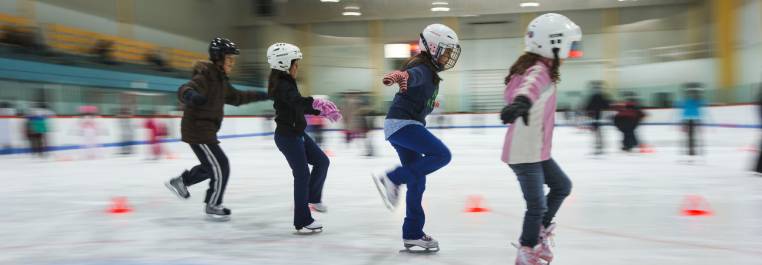
Skating lessons at the local ice arena

Skating and hockey

Enjoy drop-in Free Fun Skates at various rinks over winter break! View program dates, times and locations.

Develop your skills and enjoy the ice with a variety of drop-in programs designed to fit your schedule.

General Guidelines

CSA-approved hockey helmets are strongly recommended for most programs. Ice skates are required for all participants while on the ice.

Schedules may change. Make sure to confirm current schedules on Active Mississauga.
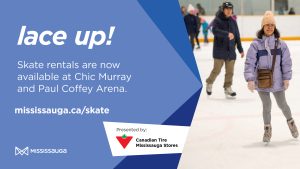
Skating Programs

Fun Skate

  • Ages: 3+
  • Description: Enjoy casual skating with family and friends. CSA-approved helmets are recommended. Approved skating aids are allowed.

Figure Skating Shinny

  • Skill Level: Must be able to skate forwards and backwards and turn with speed.
  • Description: Practice spins, jumps and routines in a non-instructional setting.

Adult and Older Adult Skate

  • Ages: 18+
  • Description: Casual skating for adults. CSA-approved helmets are recommended. Approved skating aids are allowed.

Adult Skate Fit

  • Ages: 18+
  • Skill Level: Must be able to skate forwards and backwards and turn with speed.
  • Description: A fast-paced, supervised workout skate with music and skill drills.

Hockey Programs

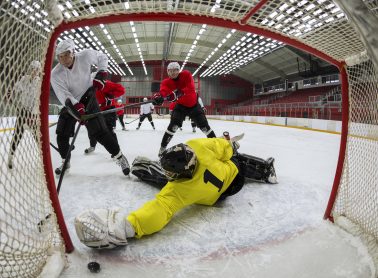
Hockey Shinny (Pick-Up Hockey)

Hockey Stick & Puck

  • Description: Practice stick handling, puck control, and skating.
  • Rules: No scrimmage or gameplay allowed. A CSA-approved helmet is mandatory. Full equipment is required for some age groups. Maximum three children per adult.
  • Age Groups:

Whether you’re stepping onto the ice for the first time or looking to refine your skills, our group lessons are designed for skaters of nearly all ages and experience levels.

What You’ll Need

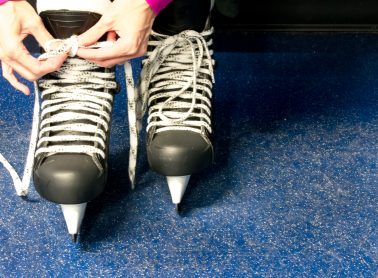
  • Recommended skates: Leather hockey skates or figure skates with laces offer better support and control on the ice.
  • Helmets: CSA-approved hockey helmets or approved figure skating helmets are a requirement. A cage is recommended to help prevent face injuries, but not a requirement.
  • Not recommended: avoid plastic skates or models with straps, buckles, or adjustable sizing. These can hinder progress and reduce stability.

Getting Started

Please review our skating tips and reminders below to make the most of your time on the ice.

Program Requirements

Ice Skating (ages 3 to 5 with adult)

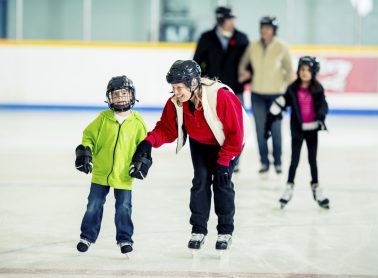
  • An adult must accompany the child on the ice (one adult per child). The adult must be able to skate.
  • Both the child and adult must wear a CSA-approved hockey or figure skating helmet along with skates.
  • Please dress appropriately for the cold arena (mittens, long pants, long sleeves, coat, etc.).

Ice Skating (ages 4 to 5)

  • This is a participation program; skaters are not evaluated. They will receive a participation button at the end of the program.
  • CSA-approved hockey helmet or figure skating helmet is mandatory. Please bring your own skates.
  • Please dress appropriately for the cold arena (mittens, long pants, long sleeves, coat, etc.).

Junior (ages 6 to 12)

  • This program consists of eight levels, appropriate for both beginners and children who want to improve their skating.
  • CSA-approved hockey helmet or figure skating helmet is mandatory. Please bring your own skates.
  • Please dress appropriately for the cold arena (mittens, long pants, long sleeves, coat, etc.).

Intermediate (ages 7 to 18)

  • Skaters must have completed Junior Level 8.
  • CSA-approved hockey helmet or figure skating helmet is mandatory. Please bring your own skates.
  • Please dress appropriately for the cold arena (mittens, long pants, long sleeves, coat, etc.).

Ice Skating (ages 13 to 17)

  • For teenagers wishing to learn or improve their skating.
  • CSA-approved hockey helmet or figure skating helmet is mandatory. Please bring your own skates.
  • Please dress appropriately for the cold arena (mittens, long pants, long sleeves, coat, etc.).

Adults (ages 18+)

  • For adults who want to learn or improve their forward skating, backward skating, turns and stopping.
  • CSA-approved hockey helmet or figure skating helmet is mandatory. Please bring your own skates.
  • Please dress appropriately for the cold arena (mittens, long pants, long sleeves, coat, etc.).

Ice Skating Adapted (ages 6 to 12)

  • This program is designed for individuals with disabilities, providing tailored accommodations for participants to learn foundational skating techniques or build upon existing skills in a supportive and adaptive environment.
  • CSA-approved hockey helmet or figure skating helmet is mandatory. Please bring your own skates.
  • Please dress appropriately for the cold arena (mittens, long pants, long sleeves, coat, etc.)

Ice Skating Adapted (ages 13+)

  • This program is designed for individuals with disabilities, providing tailored accommodations for participants to learn foundational skating techniques or build upon existing skills in a supportive and adaptive environment.
  • CSA-approved hockey helmet or figure skating helmet is mandatory. Please bring your own skates.
  • Please dress appropriately for the cold arena (mittens, long pants, long sleeves, coat, etc.)

We highly recommend you read through our All About Skating information package containing everything you need to know before you start your lessons.

Skates

  • Please watch these two videos if you are new to our skating programs:
  • New skates must be sharpened before being used on the ice. It is recommended that skates be resharpened at the beginning of each new skating session ensure optimal performance and safety.

How to dress

  • Wear gloves or mittens.
  • Wear snow pants, wind pants or shush pants. These are easy to move in, and will ensure you stay comfortable if your pants become wet during the lesson.

Staying in the arena

To ensure safety during lessons, parents and guardians must remain in the arena for the entire duration of the session. They may sit in either the warm or cold arena stands. This requirement is in place to provide immediate support in case of an emergency. Additionally, hockey benches (Home and Away) must always remain clear, as they serve as emergency exit routes.

Photography

To maintain privacy and respect for all participants and staff, please ensure that any photos or videos you take feature only your children/participants. Other individuals have not provided consent to be included in your pictures and recordings.
Report cards

  • Skating report cards differ significantly from other city programming report cards (e.g. swimming). In skating, participants develop individual skills within a level rather than mastering an entire level at once. During our programs, skaters may pass certain skills, while others may require additional practice. It is not uncommon for a skater to complete a session without passing any skills, as skating requires extensive practice over multiple sessions.
  • Participants are required to bring their report card from the previous session to their next enrolled skating lesson.
  • If you won’t be there for the last class to receive your report card, please inform your instructor
  • Preschool and adult skating classes do not issue report cards.
  • Respect skate patrol and staff at all times.
  • Individuals displaying unacceptable behaviour may be asked to leave the program.
  • All programs are non-contact; gameplay, scrimmages, and hockey equipment or toys are not permitted.
  • Food & beverages are not permitted on the ice.
  • Only ice skates are permitted on the ice at all times.
  • Only approved skating aids are permitted on the ice (wheelchairs, EZ gliders).
  • Skate in the approved direction.
  • Do not carry children.
  • CSA-approved hockey helmets are strongly recommended for all ages.