Maintain your drains to reduce the risk of flooding
Ensure that the storm drains in your driveway and backyard are clear of blockages and are working properly to reduce the risk of flooding during rainy weather.
Environment | May 22, 2026
As we head into spring rainy season, the City is encouraging homeowners to take simple steps to prevent flooding. Small actions can make a big difference. Homeowners are responsible for keeping the drains on their property clear to prevent flooding. Check that drains are not blocked, so water can flow into the stormwater system. This is critical as these drains, just like the storm drains on the roads, collect rainwater and melted snow and send it into the City’s stormwater system. They prevent debris and litter from entering the system, while helping limit flooding on private property.
Stormwater vs. wastewater
Stormwater is rain and melted snow that flows off rooftops, driveways and roads outside your home. The City maintains the public stormwater system that carries rain and melted snow into local creeks, rivers and Lake Ontario. Watch this short video to learn more about how stormwater travels through the system.
Wastewater comes from toilets, sinks, showers and washing machines inside your home. Peel Region maintains the public system that collects wastewater and safely treats it. Once treated, the clean water is returned to Lake Ontario. To report a wastewater issue, call Peel Region 905-791-7800, extension 4409.
Storm drains, catch basins and swales on private property
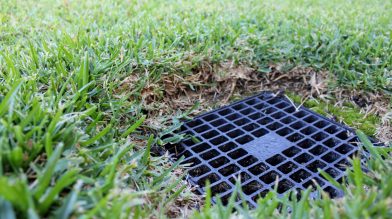
The visible part of a storm drain is its cast iron grate cover, which lets water in, but keeps big debris out. Below it is the catch basin that collects water and holds back dirt and debris. The basin is connected to an exit pipe that drains water into the City’s stormwater system. Storm drains may be in backyards or within reverse-grade driveways that are sloped towards garages.

A private backyard storm drain looks very much like storm drains on the road. The grate may look a bit different, but they work the same way. These storm drains are located at low points in a backyard and may drain water from several backyards. It is important to keep a backyard storm drain clear of blockages to allow water in nearby backyards to drain away after a rainfall. It can be more difficult to locate them in your backyard, as it could be covered by debris, landscaping or outbuildings, like a shed.
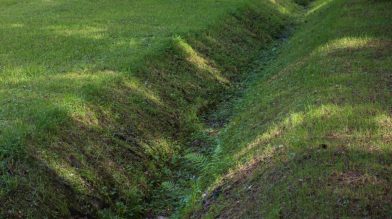
Swales are shallow, grass-covered channels in your yard that help move water away from your home. They collect and direct stormwater away from the building foundation and may flow towards a storm drain in the backyard or on the street. Swales can also absorb some of the water into the soil below. Both features of swales help your property drain extra water.
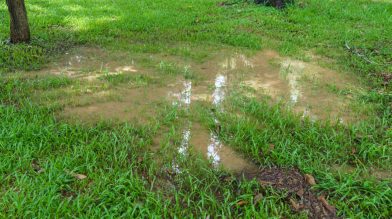
Pooling water in your backyard may indicate that there could be a backyard storm drain that has been blocked. Check your property and clear the blocked storm drain, so that it can drain water.
If your neighbours are also noticing wet backyards, you can:
- Check the lowest points in your yard.
- Look for storm drains.
- Remove any leaves, debris, or items blocking the flow of water.
Always consider grading and drainage when planning for landscaping projects, such as installing a swimming pool or retaining walls on your property. Your home was graded when it was first built. Changing grading without professional guidance can have expensive consequences. If water cannot flow properly, your risk of flooding may increase.
How storm drains and sump pumps work together
Some storm drains use the home’s sump pump to move water away from the property, so it is important to check and clean the pump and the discharge pipe regularly. Make sure they are free of debris and working properly to help your basement stay dry.
To reduce the amount of water being pumped by the sump pump, make sure that water coming from your roof eavestroughs and downspouts is directed at least three feet or one metre away from any basement foundations or nearby properties. Disconnecting your roof downspouts and adding elbows and extensions to the downspout pipe can help to direct the flow of water away from the basement foundations.

Flood risk reduction resources
Floods can happen quickly and without warning at any time of the year. Learn how to prevent floods and how to apply for flood prevention grants to make your home more resilient to future floods.
- Rain-ready home guide
- Residential guide to flood prevention
- Who owns the infrastructure around your home
- Apply for a basement flooding prevention rebate
- Apply for a flood resilience rebate
For more information about the City’s stormwater infrastructure, visit mississauga.ca/stormwater.
Tags
Media contact
City of Mississauga Media Relations
media@mississauga.ca
905-615-3200, ext. 5232
TTY: 905-896-5151
Get email updates