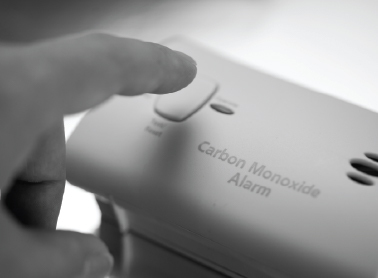
Carbon monoxide alarms save lives. Make sure you have one in your condo or apartment
New carbon monoxide alarm requirements for apartments and condo units.
Emergency and public safety | February 4, 2026
On January 1, 2026, amendments to the Ontario Fire Code came into effect, requiring carbon monoxide (CO) alarms on every floor of all homes with fuel-burning appliances, fireplaces, or attached garages. The province has recently added new requirements for those living in apartments and condo units. These new requirements help keep families across Ontario safe from the harmful gas.
CO is a harmful gas people can’t see, taste or smell. In addition to harming people, pets are also at risk of CO poisoning, which can be fatal. CO poisoning is preventable with simple steps that you can follow at your home.
Mississauga Fire and Emergency Services (MFES) is encouraging residents to follow the new safety rules. It is the responsibility of the landlord to install required CO alarms and replace when needed. If you live in a multi-unit residential building, such as a condo unit or apartment, a CO alarm must be installed in your unit if any of the following applies:
- Your unit has a fuel-burning appliance (e.g. gas stoves, cooking range) or a fireplace.
- The building has a service room, and your unit is located directly above, below, or beside the service room.
- The building has a garage, and your unit is located directly above, below or beside the garage.
- Your unit is heated by air from a fuel-burning appliance that is not contained within your unit, for example, heated air coming from a furnace in a building service room.
The new requirements help keep residents safer by increasing detection. For example, if a furnace has issues and leaks CO, it is safer when every unit in that building has CO alarms for more and enhanced protection.
Where to install
A CO alarm must be installed in each of the following locations in an apartment or condo unit:
- Adjacent to each sleeping area of your unit (this means the hallway or area outside the sleeping area, for example, a CO alarm must be installed in the hallway nearest multiple bedrooms in an apartment or condo).
- Every storey of your unit (such as lofts or penthouses), including stories that do not have sleeping areas.
- In public corridors of the building, if the corridors are heated by air from a fuel-burning appliance.
Watch the CO safety video to learn more about the importance of CO alarms.
Stay safe, it’s the law
All residents are required to enhance safety precautions by installing CO alarms at the home they own or rent. The owner or landlord is responsible, but tenants can be fined for disabling or not informing owner if device not operating, but responsibility of compliance with installation and replacement is with owner or landlord. Failure to comply with the new legislation could result in penalties starting at $235 and if convicted, could be as high as $50,000 for individuals. This applies to all homes including condos, apartments, townhouses and semi-detached, detached homes, cottages, rental properties, residential suites, care occupancies, and retirement homes to help prevent deadly CO exposure.
Don’t forget to support the maintenance of your CO alarms by:
- Testing them monthly.
- Replacing them every 10 years, or as often as required by the manufacturer.
- Ensuring all fuel-burning appliances and vents in your home are inspected annually.
- Follow manufacturer’s instructions.
- Ensure the alarm is not blocked by furniture, draperies or other items.
If purchasing more carbon monoxide alarms to meet the requirements, remember:
- Look for a Canadian certification mark.
- Know that some alarms can be sold as a two-in-one smoke and CO alarm.
Symptoms of CO poisoning
Ultimately, CO alarms can save lives. Unfortunately, CO poisoning symptoms are described as “flu-like” symptoms, which can cause confusion. If you suspect a dangerous amount of CO in your home, you could experience:
- chest pain
- confusion
- dizziness
- headache
- upset stomach/vomiting
- weakness
What to do if you suspect you have been exposed to CO poisoning or if your CO alarm is triggered:
- Find fresh air immediately
- Call 911
Learn more about CO safety and stay safe! Remember, if you are in doubt about the new CO alarm requirements please contact the Fire Prevention & Risk Reduction Division at 905-456-5700 (a non-emergency line).
Tags
Media contact
City of Mississauga Media Relations
media@mississauga.ca
905-615-3200, ext. 5232
TTY: 905-896-5151
Get email updates