When geese season returns expect more honks and hisses
Learn about ways to share outdoor areas with Canada geese and prevent any aggressive encounters.
City services | June 3, 2026
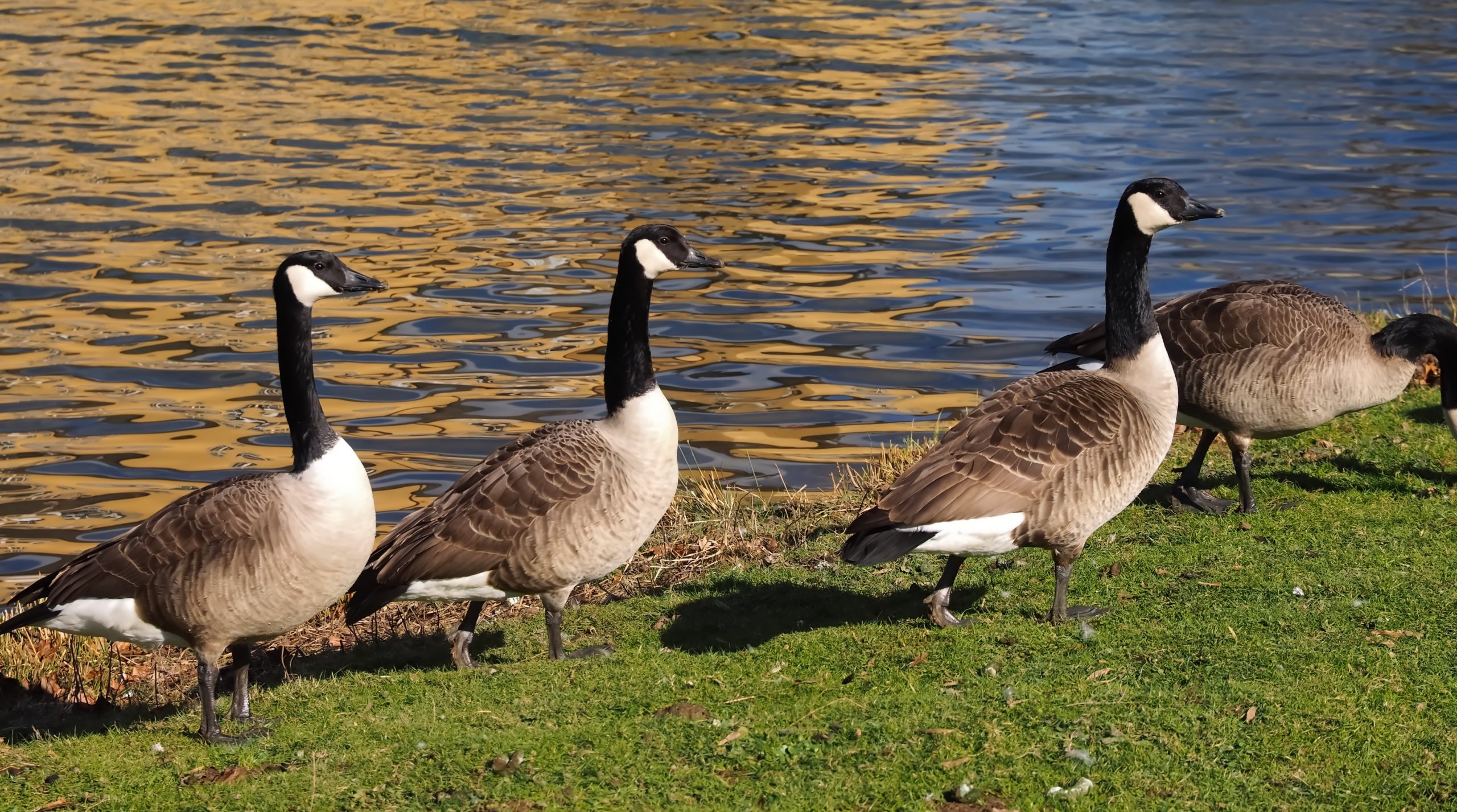
Each spring, Canada geese return to parks, pathways and open grass across Mississauga. During nesting season, their defensive behaviour can create problems for pedestrians, cyclists, drivers and pet owners. From March through June, adult geese guard nests and their goslings. They can get aggressive and may hiss, lunge or block a path if they feel a person, pet or bike is getting too close.
Awkward places to nest
Geese are most often found where there is easy access to water and short grass. In Mississauga, that means waterfront spots such as Lakefront Promenade Park, Jack Darling Memorial Park and Port Credit, along with stormwater ponds and neighbourhood parks and green spaces such as Lake Aquitaine, Saigon Park and Lake Wabukayne. Nests can also be found in busy and inconvenient spots like boulevards, parking lots, sidewalks, sports fields and trails, and even your own backyard.
In some situations, the City may use safe and humane wildlife management methods, such as relocation, to help people and geese share public spaces. These actions protect geese and reduce aggressive interactions.
Why geese can be frustrating
At several City parks, large numbers of geese, known as flocks, may crowd the waterfront, block paths and leave droppings on seating, playground equipment and paved areas. This makes it harder for people to walk, cycle, picnic or let their children play in parks.
Droppings
Goose droppings can cause serious environmental and public health concerns because their feces have high levels of nutrients (phosphorus and nitrogen) as well as harmful bacteria like E. coli and salmonella. When these droppings are washed into stormwater management ponds, lakes and waterways, they accelerate toxic algae blooms and contaminate the water. As algae overgrows and decomposes, it consumes oxygen in the water that can harm and kill aquatic life like fish.
Aggressive behaviour
For the most part, geese tend to stay away from humans. However, tensions are strongest from March through June when adult geese guard their nests and goslings. During this time, residents should be aware that geese will hiss, lunge or block a path if they feel a person, pet or bike is too close.
Before a goose charges, it will often show that it wants more space. Typical warning signs include direct staring, a lowered head, hissing and spreading its wings to make itself look larger. If those warnings are ignored, a goose, or several geese, may lunge, rush forward or fly toward a person to push them away from their nest or goslings.
What to do during an aggressive goose encounter:
- Make direct eye contact with the goose.
- Avoid turning your back or running as it will chase you.
- Back away slowly and calmly without shouting, flailing or making sudden movements.
- If the goose gets very close, raise your arms only to protect your face and continue moving away from the nesting area cautiously.
Keep children and pets away
Small children should keep away from geese and nests. Parents and caregivers should remind children not to run toward, follow or try to touch geese, goslings or eggs, even if the goose seems calm. Giving nesting birds plenty of space helps lower the risk of aggressive reactions and keeps everyone safe.
Dogs can quickly make a situation worse during goose season, even when they are calm or just curiously wandering around. To a goose, a dog may look like a direct threat to their eggs or goslings. Keeping dogs leashed in public spaces, except in designated leash-free zones, helps owners stay in control and keep their dogs clear of nesting birds.
Give geese plenty of space, avoid grassy nesting areas when birds are present and move along calmly without letting a pet get close.
When to call the City
It’s important to know that there are clear rules for dealing with Canada geese. Many wild birds, including waterfowl and songbirds, are protected under the Migratory Birds Convention Act. That means people can’t move active nests, eggs or birds without proper authorization. Canada geese, along with their nests and eggs, are protected under federal law. Feeding wildlife is also prohibited under Mississauga’s Animal Care and Control By-law.
If you see a sick, injured or orphaned goose, contact Mississauga Animal Services at 905-896-5858. Residents should avoid trying to capture or treat the bird themselves. The Canadian Wildlife Health Cooperative can also be reached at 1-866-673-4781 to report multiple wild bird or mammal deaths.
For geese issues in City parks or other public spaces, residents can contact the City of Mississauga at 311, or 905-615-4311 from outside city limits. Reports are most useful when a bird is creating a clear safety issue, such as blocking a sidewalk or road.
When geese nest on private property, owners may need to consult a licensed wildlife management company on what steps they can legally take.
Why urban geese are so common
Across southern Ontario, Canada geese are common in urban areas with open grass, nearby water and few predators. Some populations migrate, while others stay in cities like Mississauga year-round. In spring, females lay several eggs and spend about four weeks incubating them while males stand guard. By early summer, adults shed their feathers, temporarily losing the ability to fly and gather in larger numbers near water, grassy areas and waterfront.
Canada geese can live for decades and often return to the same nesting areas year after year, when conditions remain favourable.
Feeding Canada geese is illegal
Feeding birds, like Canada geese, may seem harmless, but it can have negative consequences. These include serious health and safety concerns for residents and birds. Food such as bread and crackers does not meet the geese’s nutritional needs. It also encourages birds to gather in larger numbers and makes them less wary of people, which can lead to more aggressive behaviour.
Feeding any wildlife, including coyotes, squirrels, pigeons and foxes, is prohibited in Mississauga and can result in a fine between $365 and $100,000.
In a city where people and wildlife share the same parks, trails and the waterfront, keeping the peace with Canada geese starts with giving them space. When residents understand their behaviour and avoid feeding them, it becomes easier for everyone to share Mississauga’s green spaces safely.
Tags
Media contact
City of Mississauga Media Relations
media@mississauga.ca
905-615-3200, ext. 5232
TTY: 905-896-5151
Get email updates