Tree of Heaven
Tree-of-Heaven is an invasive tree species native to China that’s restricted in Ontario under the Invasive Species Act.
It grows fast in most conditions, spreads quickly and crowds out native plants. The loss of native plants reduces the biodiversity of an area. This results in reduced ecosystem health and less resilience to environmental change.
It’s also a preferred host plant for the adult Spotted Lanternfly, an invasive insect identified as an emerging threat to the forestry industry. The insect is not currently present in Canada.
What it looks like
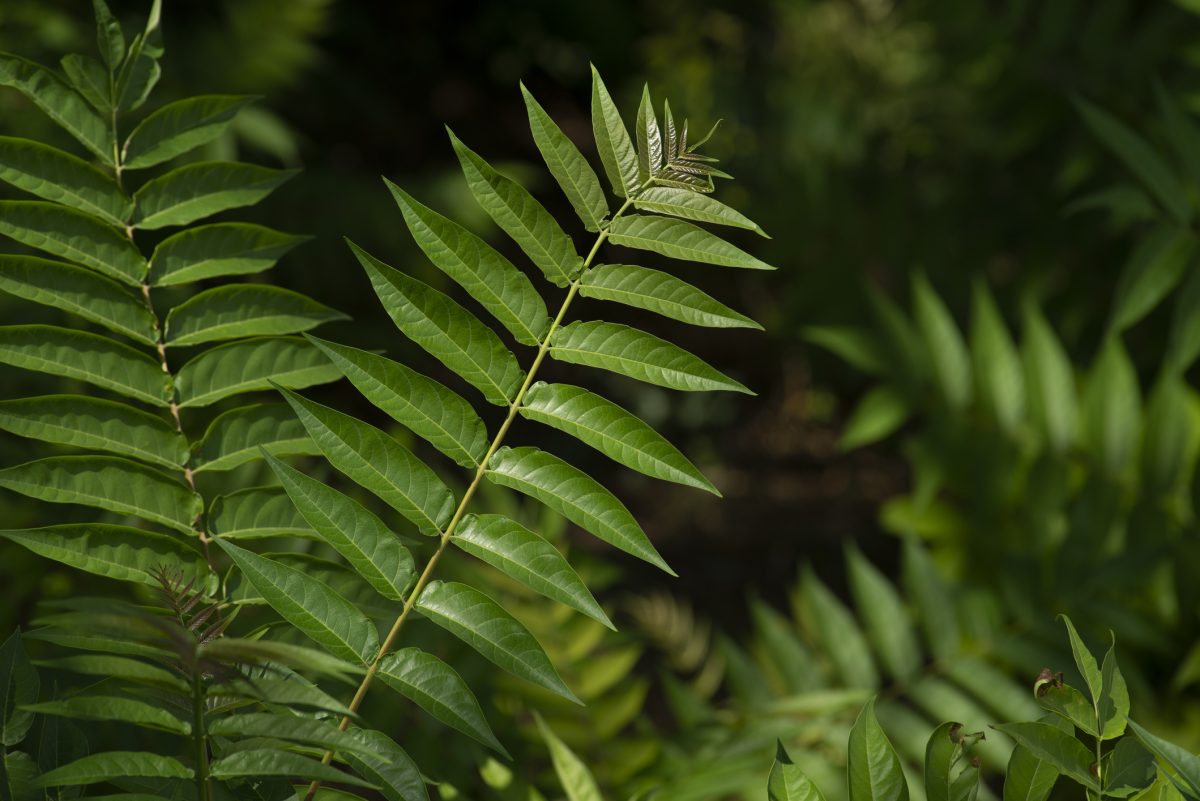
| Form | A tree, 18 to 21 metres tall at maturity. |
|---|---|
| Habitat | Grows well in disturbed areas, often found alongside edges of woodlots and canopy gaps. It’s known to sprout out of cracks in the pavement. |
| Leaves | Leaves are clustered into 11 to 41 leaflets, with each having 1 to 2 rounded teeth at the base of each leaflet. Leaves emit a foul smell when crushed. |
| Flowers | Yellow-green and appear in the late spring. |
| Fruits and seeds | Flat and papery, clustered together, reddish-orange and turn brown by fall. |
| Bark | Grey, with long, thin, whitish streaks at maturity. |
| Additional characteristics | Trunk and branches of the tree are fragile and break easily, which may cause injury or damage to property and infrastructure. |
How it spreads
Tree-of-Heaven spreads aggressively by seeds and roots, which can sprout several new trees near the parent plant.
While the Tree-of-Heaven isn’t planted on purpose in the City of Mississauga, its ability to thrive in tough urban conditions means it often appears in unwanted places, creating extra work for homeowners and City crews who must keep removing new shoots from gardens, parks and around fences and buildings.
What we're doing
We’re taking a proactive approach to controlling Tree-of-Heaven in publicly owned natural areas, parkland and boulevards. As populations across the City are relatively low compared to other urban areas, we’re well positioned to practice early detection and rapid response to prevent its spread and establishment.
After a tree is removed, Forestry staff will inspect the site to determine whether it meets the criteria for a replacement planting. If suitable, a replacement tree will be selected based on the site’s conditions and species suitability.
Residents will receive a notice on their door if a tree on public property adjacent to their home is scheduled for removal. Emergency removals may occur without notice for safety reasons.
If you have questions about the removal of a street tree or park tree, call 3-1-1. You’ll be connected to a Forestry inspector for your area.
Why Tree of Heaven trees are being removed
This invasive tree species spreads aggressively and is listed as a Priority 1 invasive species in the City’s Invasive Species Management Plan, making it a target for citywide control.
Removing these trees prevents long-term ecological and financial costs.
Currently, populations of Tree-of-Heaven are still low in Mississauga. Acting early helps prevent the species from becoming established, as has happened in other municipalities.
Some effects of invasion include:
- Forms dense colonies that crowd out native trees and plants, reducing biodiversity
- Produces natural chemicals that inhibit the growth of surrounding vegetation
- Re-sprouts rapidly from roots and stumps, making it difficult to control
- Damages infrastructure, as roots can grow through sidewalks, sewers, foundations, and pavement, leading to costly repairs
What you can do
Report Tree-of-Heaven plants found in City parks and natural areas.