Protected intersections
Protected intersections have bike lanes and sidewalks that are separated from car lanes with physical infrastructure like raised curbs and painted road markings. They improve safety and comfort for cyclists and pedestrians, reduce conflicts and collisions with cars and create a safer space for everyone.
The City is adding protected intersections in key areas across Mississauga to help make our roads safer and to support active transportation like walking and biking.
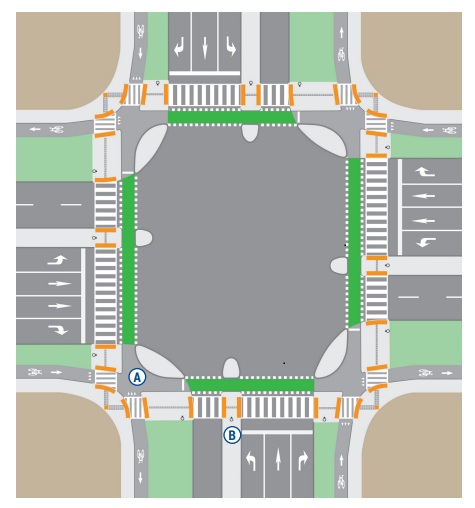
How they're safer
For pedestrians
Protected intersections help pedestrians, especially with mobility issues, cross more safely with:
- Shorter crossing distances due to curb extensions (bump-outs) that reduce your time in traffic.
- Safer waiting areas and improved visibility to drivers and cyclists thanks to well-defined crossing areas and waiting zones.
- Separate crossing phases from signal timing that reduce conflicts with turning vehicles and cyclists.
- Safer waiting areas with refuge islands that allow you to cross in two stages.
These features are especially helpful for seniors, children and people with mobility challenges.
For cyclists
Protected intersections are designed to make cycling safer for all ages and experience levels with:
- Marked crossing paths for bikes, helping drivers see where to expect you.
- Space for you to wait ahead of turning vehicles, called an advance stop bar or bike box, increasing your visibility to cars.
- Marked crossing paths for bikes that help drivers see where you are.
These features make intersections less intimidating and more accessible for cyclists of all ages and experience levels.
For drivers
Protected intersections reduce the risk of collisions with features like:
- A clear separation of spaces so drivers know where to expect cyclists and pedestrians.
- Dedicated turn bays and yield lines give you clear points to stop and yield before turning.
- Design elements that encourage slower, more cautious turns, lowering the risk of collisions with vulnerable road users.
Always obey traffic signals and give way to pedestrians and cyclists in the designated crossing areas.
Where you’ll find protected intersections in Mississauga
The City is installing protected intersections in areas with high volumes of pedestrian and bicycle traffic, such as:
- Near schools and parks
- Along major cycling routes
- At intersections with a history of vehicle turning collisions involving pedestrians or cyclists
Protected intersections are part of our Vision Zero goal to build safer, more inclusive streets for everyone.