Mississauga leads the way in invasive species management
The City is marking Invasive Species Awareness Week by highlighting major progress, innovative management techniques, and community actions that are helping protect and restore the city’s natural ecosystems.
City services | February 23, 2026
The City of Mississauga is recognizing Invasive Species Awareness Week from Monday, February 23 to Sunday, March 1, 2026.
Invasive species are plants, animals, insects and micro-organisms that are not native to the area where they are living. They can cause harm to native species and create an imbalance with ecosystems and habitats. The City of Mississauga is leading the way in invasive species management guided by its Invasive Species Management Plan, and has spent many years actively addressing various species across the city. There are actions that Mississauga residents can also take all year-long to prevent invasive species from spreading.
Invasive species are the second biggest threat to biodiversity after habitat loss. They can negatively alter Mississauga’s parks, woodlands, natural areas and wildlife habitats. Invasive plants can take over the space, change the soil composition and compete for nutrients – making it harder for native plants to grow.
Invasive insects can cause direct harm to trees and other native plants by transmitting disease or eating the leaves or stems. Consistent effort and adaptive management are required to maintain invasive species populations at levels that do not impact native ecosystems. Mississauga has established strong programs to ensure management is effective and lasting.
Managing invasive species in Mississauga
In 2025, the City’s Forestry team leveraged grants and funding to deliver projects to strengthen the city’s ecosystems. The Forestry team has also made significant progress managing invasive species at its priority sites. In just five years, the City is more than halfway through full implementation.
Funding for invasive species control initiatives
In 2025, the City was awarded more than $42,000 in funding from the Invasive Species Action Fund (ISAF) provided by Invasive Species Centre and supporting funder, the Ontario Ministry of Natural Resources. With this funding, the City was able to control:
- 1,814 m2 of Japanese Knotweed at Iggy Kaneff Park.
- 10,365 m2 of Dog-Strangling Vine at Paul Coffey Park and Birchwood Park.
- 13,246.3 m2 of Wild Parsnip and 84.6m2 of Giant Hogweed across 32 sites.
- 6,216 m2 of Tree-of-Heaven at nine natural areas.
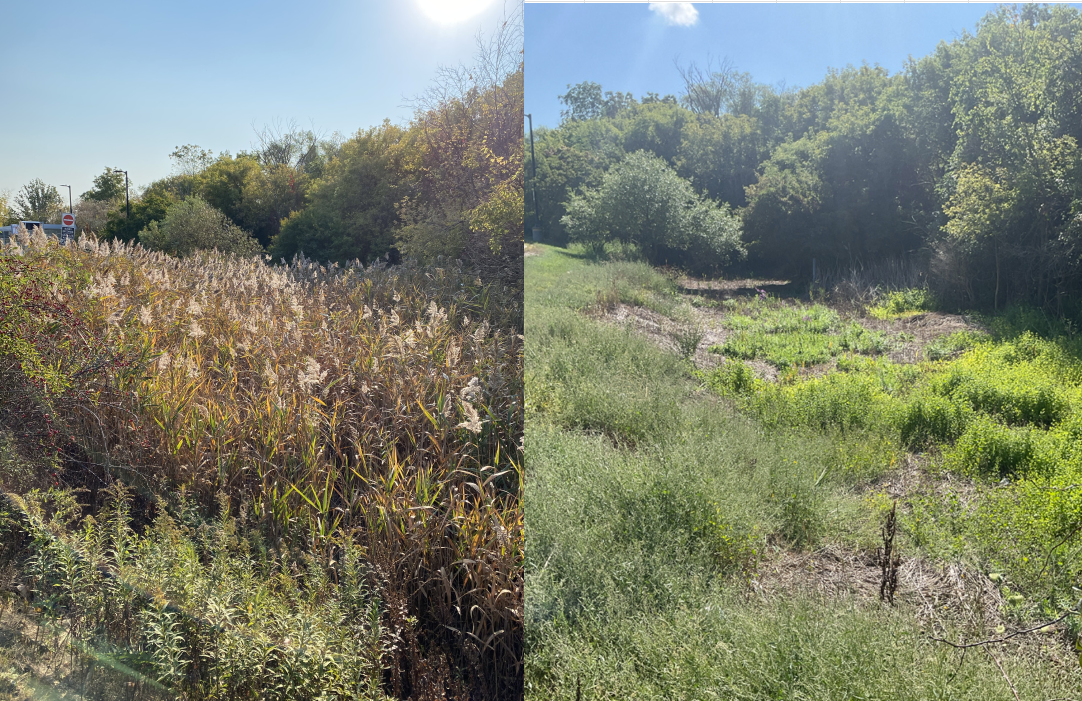
Also in 2025, the City was awarded $20,000 in funding from the Invasive Phragmites Control Fund provided by the Ontario Phragmites Action program and supporting funder, the Ontario Ministry of Natural Resources. Through this funding, the City successfully completed invasive phragmites control across 9.66 hectares of natural areas at 44 sites throughout the city. These efforts extended across multiple watersheds, enhancing ecological health and resilience on a city-wide scale.
Invasive phragmites are fast-spreading plants that can outcompete native species for water and nutrients. Targeted control of this plant will reduce negative impacts on native plants and wildlife, reduce damage to infrastructure, and increase biodiversity in Mississauga’s natural areas.
Goat grazing has been transformational
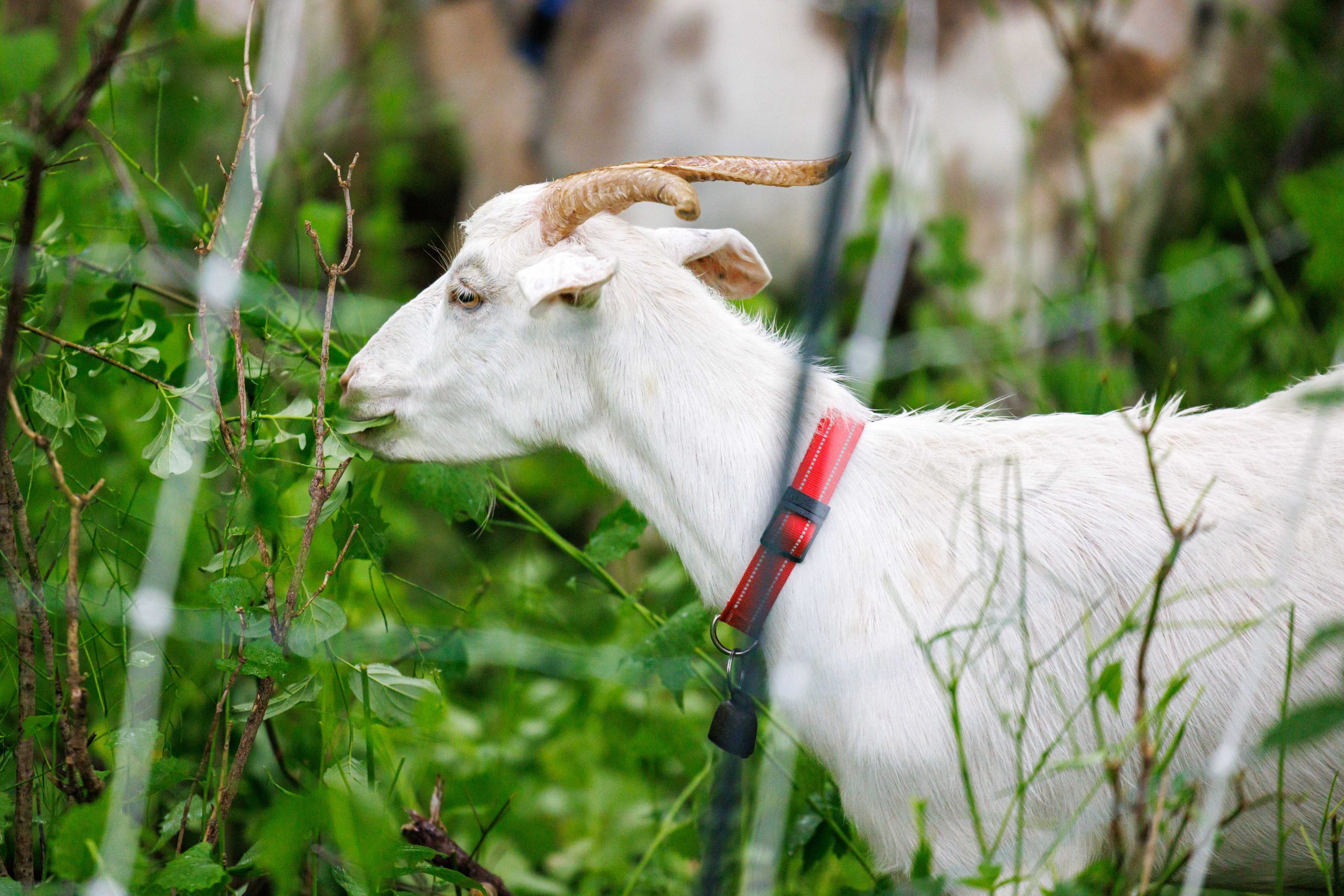
The City launched a multi-year prescribed goat grazing program targeting invasive plants across 1.2 hectares of natural areas at five sites. In 2024, Mississauga became Ontario’s first municipality to use this method to control invasive species.
Goat grazing is a low-impact and chemical-free approach to invasive species management. Forestry staff are implementing a three-year monitoring framework to evaluate grazing effectiveness across diverse habitats and multiple invasive species. Through the goat grazing program, Mississauga has been a leader in innovative, evidence-based conservation and other cities have followed. Stay tuned – the goats are ‘herding’ back to Mississauga in 2026!
How you can help
The best way to protect Mississauga’s natural spaces from invasive species is to prevent them from spreading. Help keep the city’s natural spaces healthy and beautiful.
- Learn more about invasive species found in Mississauga, including how to spot them, dispose of them, and report them.
- Stay on official trails to avoid picking up and spreading seeds that stick to clothing or fur.
- Plan to include native plants in your garden this spring.
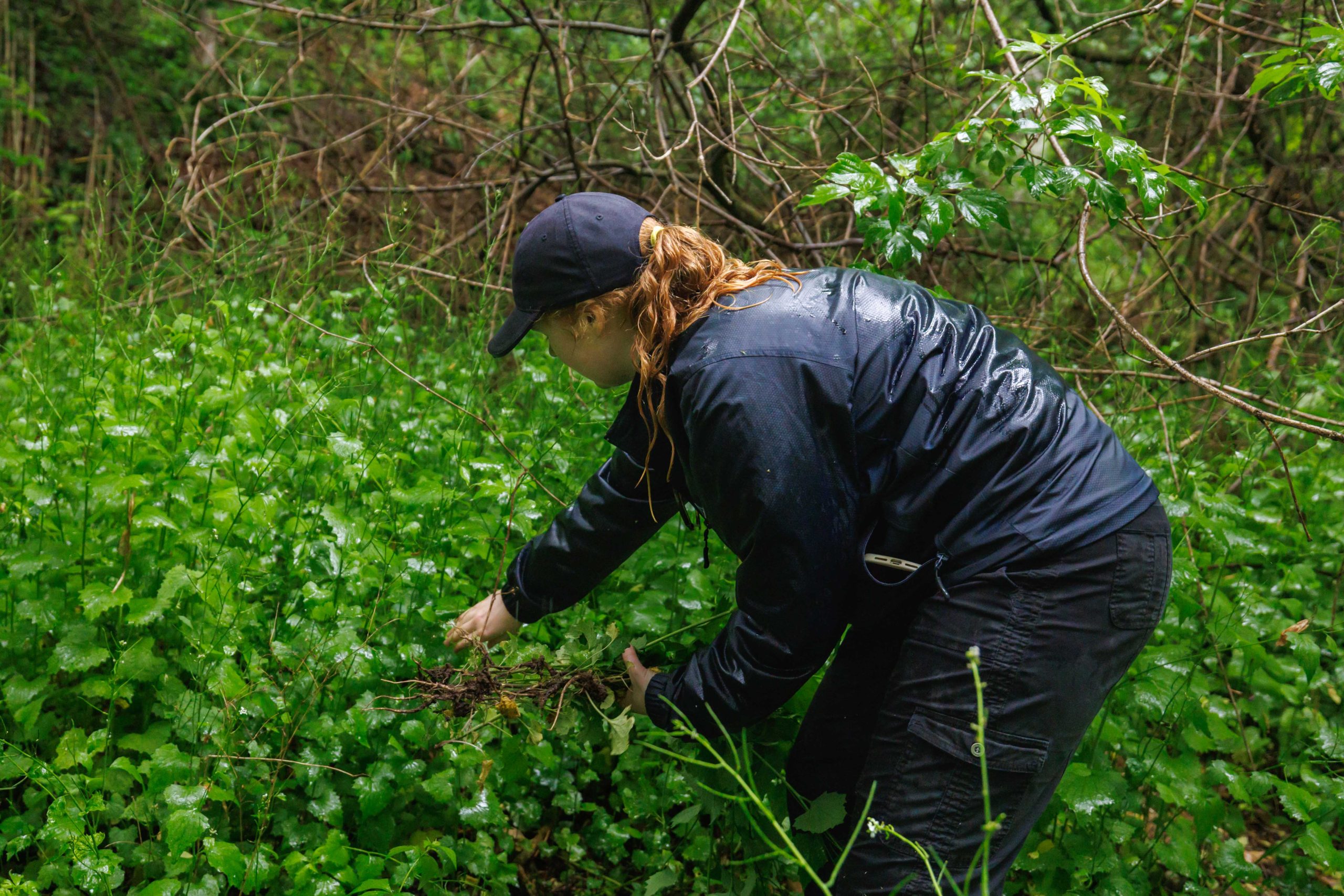
- Become a Mississauga Nature Steward. Volunteers will be responsible for removing invasive plants in a designated park or natural area using the tools provided by the City. Mark your calendars – registration will open Monday, April 6 to Friday, April 17.
- Sign up to receive emails from the Forestry team about events you can join as part of the City’s Invasive Species Management Plan.
Looking ahead, the City remains committed to advancing invasive species control and ensuring long-term benefits for the environment and for the families who live, work, and play in Mississauga.
Learn more about invasive species and visit mississauga.ca/forestry.
Tags
Media contact
City of Mississauga Media Relations
media@mississauga.ca
905-615-3200, ext. 5232
TTY: 905-896-5151
Get email updates