Warmer weather, melting snow: What you need to know
Warmer spring weather and heavy rain can melt snow and ice fast. This can make water levels rise in rivers, creeks, stormwater ponds and Lake Ontario. This can increase the chance of flood risk. Learn what steps you can take to stay safe.
Emergency and public safety | March 5, 2026
As the weather warms up, snow and ice start to melt. This is a normal part of spring, but it can add a higher risk of flooding to Mississauga.
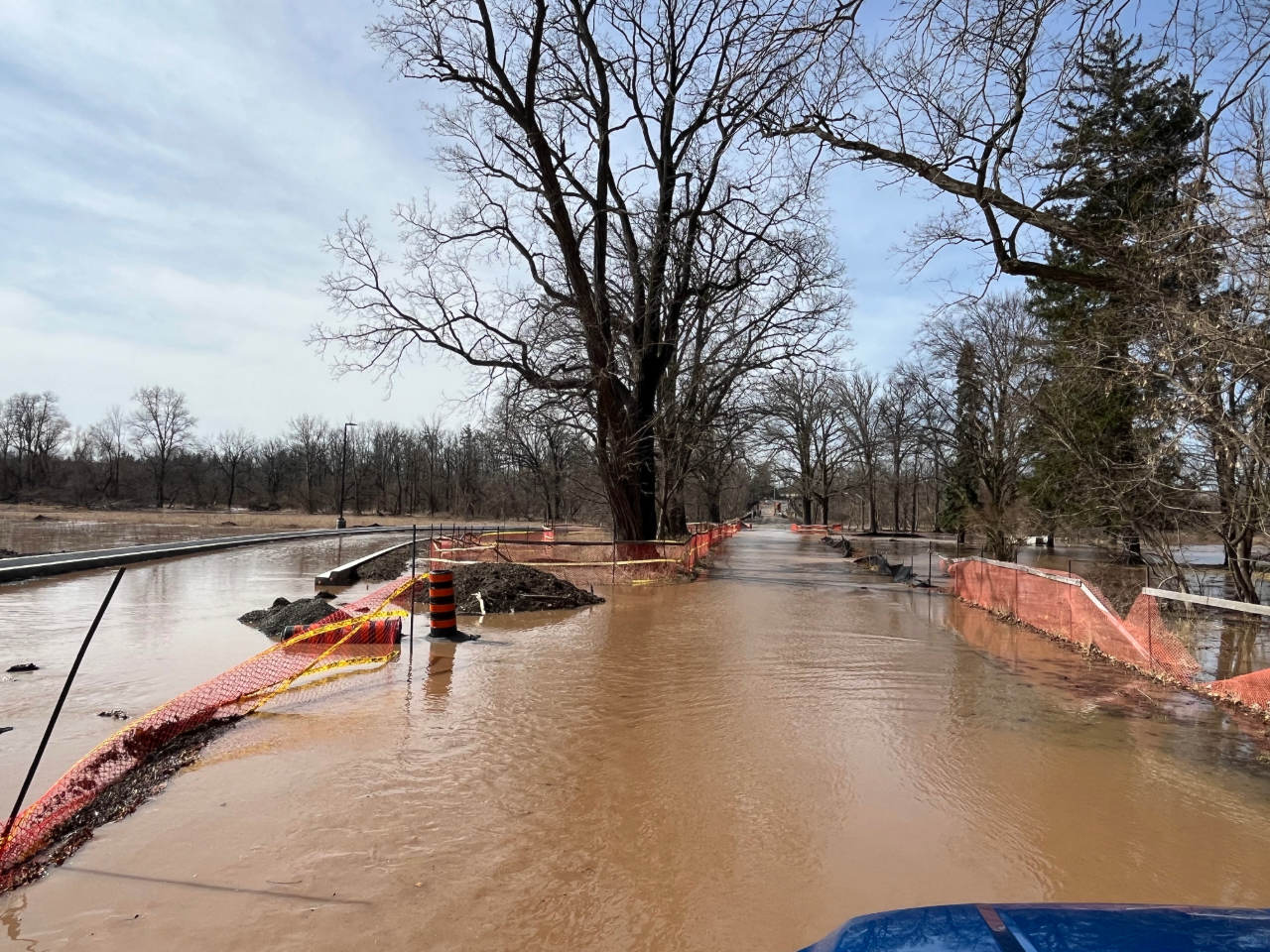
Melting snow and rising water levels can bring added flooding risks to your neighbourhood. When heavy rainfall lands on the frozen ground, it can cause the city’s rivers, creeks, stormwater ponds and Lake Ontario to overflow and impact nearby parks, trails and neighbourhoods.
Why is there a higher flood risk in spring?
Spring brings a mix of rapid snowmelt, heavy rain and breaking ice. These can all cause water to build up faster than the ground and drainage systems can handle.
Rapid snowmelt
Warmer spring temperatures can melt snow very quickly. When a lot of snow melts at once, the ground can’t absorb the water fast enough. This is especially true if the soil is still frozen underneath. The extra water then runs off into rivers, creeks, stormwater systems and Lake Ontario. This can raise water levels and increases the risk of flooding.
Heavy spring rain
Spring often brings heavy rainstorms. When rain falls on top of melting snow, the extra water can be too much for the city’s drainage systems to handle. This can cause water levels to rise in nearby rivers and creeks, and increase the risk of flooding in certain areas.
Ice jams
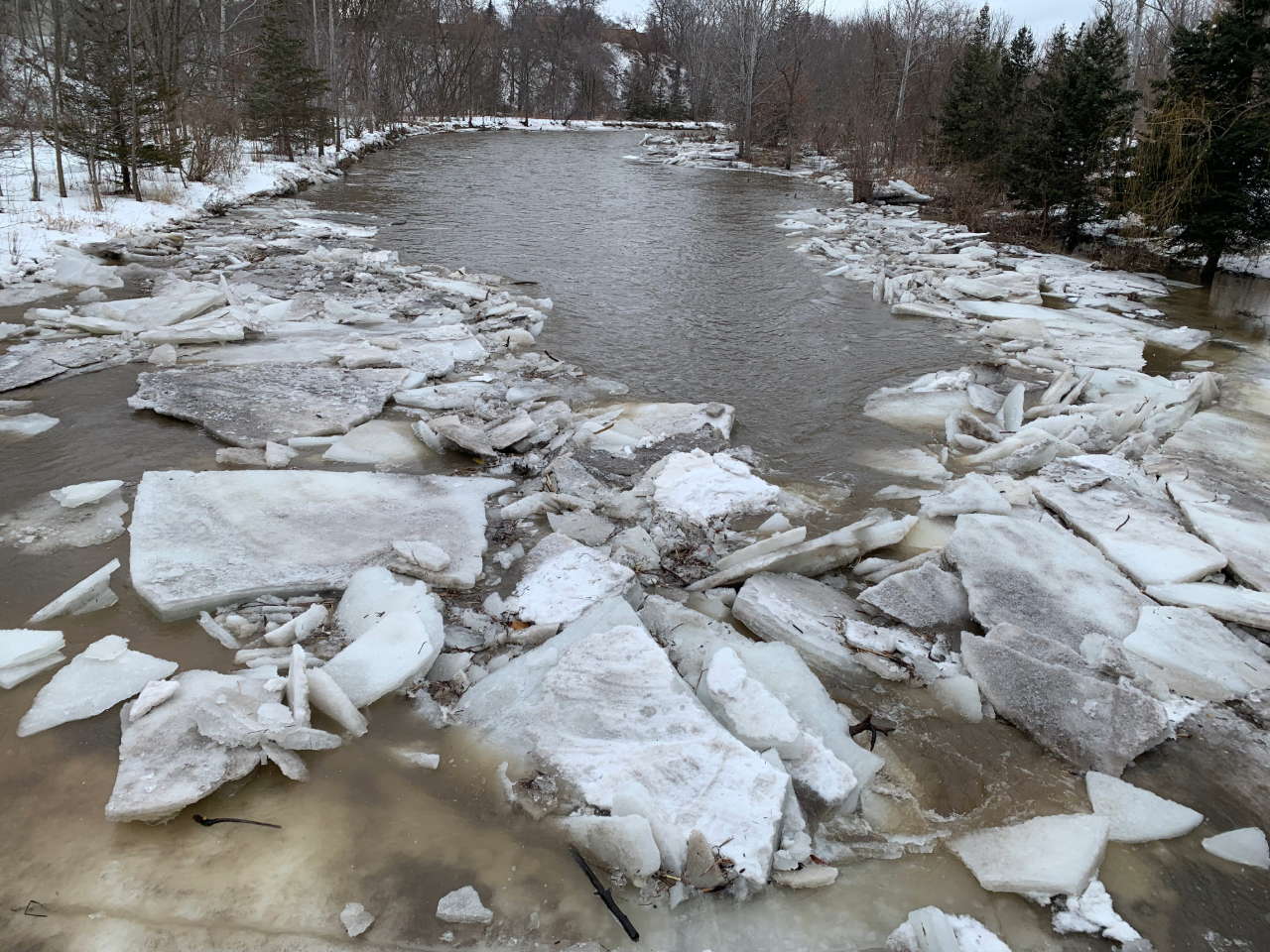
In early spring, many rivers and creeks still contain ice. As this ice breaks apart, large chunks can get stuck at bends, bridges or other narrow points along the water. These blockages act like temporary dams and can cause water to back up. When an ice jam suddenly breaks free, it can send a rush of water downstream which may trigger flash flooding.
What is a flood watch or warning?
- Flood watch: Flooding may happen in certain areas
- Flood warning: Flooding is happening or will happen soon
The Credit Valley Conservation (CVC) and the Toronto and Region Conservation Authority (TCRA) issue these watches and warnings when conditions like heavy rain, melting snow or ice buildup could lead to rising water levels.
If a flood warning has been issued, act immediately to protect yourself from danger and your home from flood damage.
Protecting yourself and your family
Spring thaws can happen quickly. Here are some steps you can take to keep yourself and your loved ones safe this spring.
Stay updated on weather and flood alerts
Regularly monitor:
- The Weather Network (website or app)
- Credit Valley Conservation (CVC)
- Manages the Credit River watershed
- Toronto and Region Conservation Authority (TRCA)
- Manages the Etobicoke Creek and Mimico Creek watershed
- Conservation Halton
- Manages Lisgar district and Sixteen Mile Creek
- The City’s website and X, Facebook and Instagram accounts.
These resources provide up-to-date weather updates to help you stay informed and prepared for changing conditions.
View Conservation Ontario’s map to find out which Conservation Authority serves your neighbourhood in Mississauga. The City works closely with all three local Conservation Authorities to check conditions and stay ahead of potential flood risks.
Monitor kids and pets near waterways
Talk to children about the dangers of fast‑moving water, unstable riverbanks and rising water levels. Keep a close eye on them to make sure they stay away from creeks, rivers, stormwater ponds and Lake Ontario where water can be higher and faster than usual.
Keep pets on a leash and away from high‑water areas as well. Shorelines can be slippery, unstable and unpredictable during rapid snowmelt.
Have an emergency plan
Take time with your household to:
- Review flooding preparedness and what to do before, during and after a flood
- Identify safe exits from your home
- Update your emergency contacts and ensure numbers are saved on everyone’s phones
- Make sure everyone knows when and how to call 911
Protecting your home
Fast-melting snow and rising water levels can increase flooding risk. Taking a few preventive steps now can help reduce water damage to your home.
Clear snow away from your home’s foundation
Shovel snow at least three to five feet away from your house (or as much as possible). Be sure to clear around window wells and exterior doors. This helps stop melting snow from seeping into your basement or getting through low entry points.
Keep gutters, downspouts and eavestroughs clear
Ice in your gutters, downspouts and eavestroughs can block melting snow, causing water to overflow and pool near your foundation.
Do the following when it’s safe or consider hiring a roofing professional to help:
- Remove ice dams or blockages in your gutters, downspouts and eavestroughs where you can
- Make sure downspouts extend three to six feet away from your home
Check storm drains for blockages
If it’s safe to do so, clear leaves, snow, ice and debris from storm drains near your home. This helps water drain properly and reduces the risk of street or property flooding.
Report a problem with a storm drain on the road online or by calling 311 (905-615-4311 outside City limits).
For more tips and guidance, the City offers a Rain-Ready Home Guide to help you protect your home from heavy rain and snow.
Stay prepared
Keeping a close eye on changing weather conditions, preparing your family and maintaining your home can make a big difference during the spring thaw. A little preparation now can help protect both your loved ones and your property as temperatures rise.
Learn more about flooding in Mississauga.
Tags
Media contact
City of Mississauga Media Relations
media@mississauga.ca
905-615-3200, ext. 5232
TTY: 905-896-5151
Get email updates