Roundabouts
Roundabouts are circular intersections designed to help traffic flow and reduce serious collisions. They are proven across Canada and around the world to improve road safety in growing urban areas like Mississauga.
The City is adding roundabouts in key areas across Mississauga to make roads safer and more efficient for drivers, cyclists and pedestrians.
How they're safer
For drivers
Roundabouts help reduce the number and severity of collisions by:
- Lowering speeds to 20 to 30 km/h
- Reducing congestion and delays, making collisions that do occur less severe
- Reducing the risk of more serious crashes, like T-bones and head-on collisions
- Simplifying navigation for drivers who travel only in one direction (counterclockwise) with no risky left turns
For cyclists
Cyclists benefit from roundabouts through improved visibility, reduced traffic speed and more predictable vehicle movements. Other benefits include:
- Calmer traffic flow and speeds, reducing the risk of severe collisions with cars and bikes
- Designated cycling facilities with shared lanes, marked bike crossings, or multi-use paths to support different comfort levels
- Fewer conflict points with cars and more awareness between cyclists and cars compared to a traditional traffic signal intersection
We continue to design roundabouts using Ontario Traffic Manual and City guidelines to make sure they are safe and accessible for all users, including cyclists.
For pedestrians
Roundabouts are also safer for pedestrians in several ways:
- Crossings are shorter and set back from the main circle and allow pedestrians to cross in one direction of traffic at a time
- There are no right turns or high-speed movements and vehicles must yield to pedestrians when entering or exiting a roundabout
- Design elements like raised medians, signage and lighting help drivers see pedestrians better, improving visibility even in winter conditions
Why roundabouts work for Mississauga
With the city’s continued growth, we need road designs that are safer, more efficient and sustainable. Roundabouts also:
- Limit idling time by motor vehicles and therefore reduce greenhouse gas emissions
- Function without electricity unlike traffic signals, and are more resilient in severe weather conditions
- Typically have lower maintenance and operating costs (but higher construction costs)
Comparing roundabouts to traffic signals
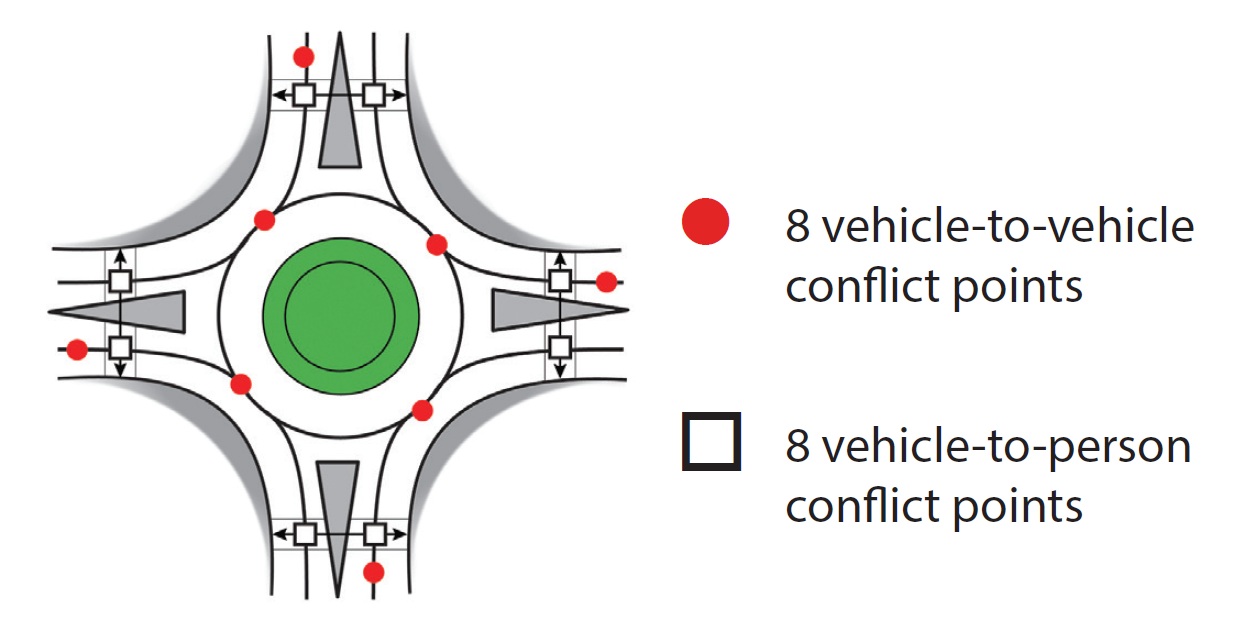
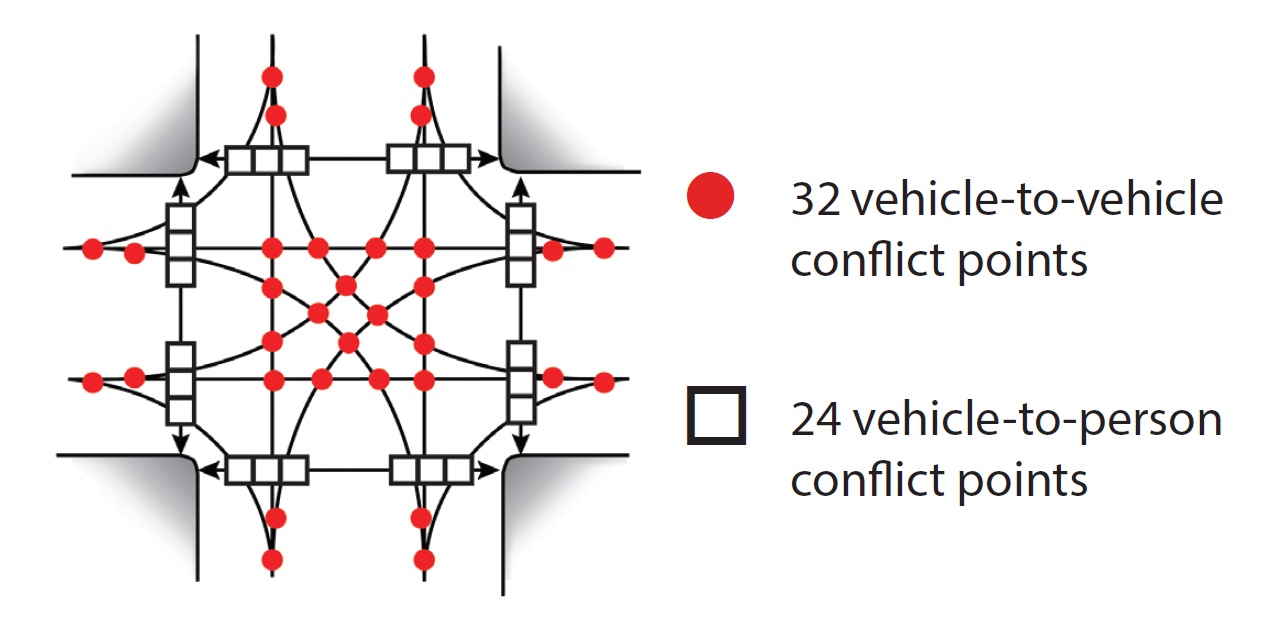
Roundabouts are part of our Vision Zero goal to build safer, more inclusive streets for everyone.