Leading pedestrian and bicycle intervals
In high-volume traffic areas, advanced signals like leading pedestrian intervals (LPIs) and leading bicycle intervals (LBIs) give people extra time to cross intersections. These signals help pedestrians, cyclists and drivers to commute safely and efficiently.
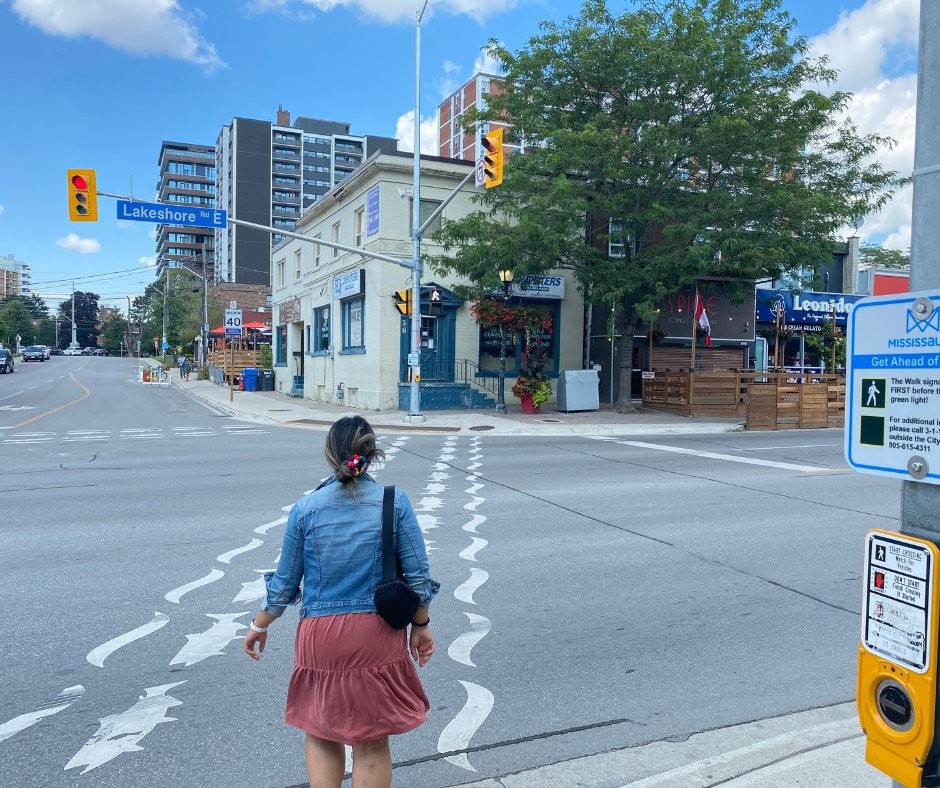
LPIs start the pedestrian “walk” signal five seconds before the green light for vehicles. This signal gives pedestrians a chance to enter the crosswalk and become visible before vehicles start to move.
LBIs offer cyclists five seconds ahead of vehicles at intersections when using a dedicated bike lane. This improves cyclist safety, especially in locations where vehicles are turning.
How the signals work
For pedestrians
LPIs are designed to help pedestrians:
- Be seen with an advanced start time to walk
- Travel safely through designated crossings
- Reduce the risk of collisions by as much as 60%, especially in high-traffic areas
For cyclists
LBIs are designed to help cyclists:
- Enter an intersection ahead of vehicles to reduce the risk of conflict with drivers
- Stay in their lane by following proper signals and crossing at designated areas
- Stay alert to drivers who may be turning or don’t yield as required
For drivers
Drivers in Mississauga should follow these rules:
- Watch for pedestrians and cyclists who may proceed before your green light
- Yield to pedestrians and cyclists who are already in the crosswalk or intersection
- Follow traffic signals carefully, including staying alert at a green light
LPIs and LBIs are part of our Vision Zero goal to build safer, more inclusive streets for everyone.