Mississauga’s Healthy City Strategy turns vision into action, making healthy living easier for residents
Actions are underway to improve health, equity and quality of life for Mississauga residents.
City building | May 21, 2026
The City of Mississauga is making strong progress on its Healthy City Strategy. Actions are underway to embed health and equity into City plans and services. These actions are intended to address the rising prevalence of diabetes and associated chronic conditions and help residents stay active, connected and supported in their communities.
Approved by Council in December 2024, the Strategy outlines 25 actions across 10 themes aimed at addressing the root causes of chronic disease, including type 2 diabetes, by improving the conditions that shape health. As of May 2026, most actions are underway across City programs, operations and initiatives, with one focused on renewing the Strategy in five years.
The Strategy is grounded in collaboration with community organizations, global partners in the Cities for Better Health network and local research partners, including the University of Toronto’s Novo Nordisk Network for Healthy Populations (NHP). It aligns with the City’s Strategic Plan and Official Plan vision and is supported by the NHP’s Catalyst Grant, which has funded 23 projects, engaged more than 50 community organizations, and invested nearly $2.34 million over 5 years.
Healthy City Strategy progress highlights
Mississauga is advancing the Strategy through partnerships and community-based programs, including:
Growing Healthy Places Mississauga
A multi-partner initiative supporting children aged six to 13 in underserved communities through school-based programs focused on physical activity, nutrition and access to recreation. Now one year into implementation, the initiative brings together Ophea, 8 80 Cities, Brock University, Novo Nordisk Canada Inc., the City of Mississauga, the Peel District School Board, and the Region of Peel (Public Health) to co-design, deliver and evaluate solutions rooted in community needs.
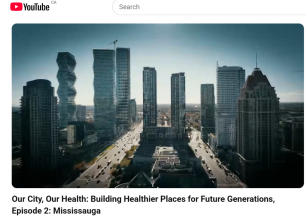
Watch this video to see how Growing Healthy Places Mississauga is making a real difference in the community.
More affordable and accessible recreation for all ages
- The Sauga Summer Pass reached capacity in 2024 and 2025 and includes free MiWay rides for youth aged 12 to 16.
- The 65+ Fit free fitness membership launched in April 2025, reaching about 130,000 older adults and contributing to a 39 per cent increase in memberships (51,341 issued).
Safer, easier ways to get around
- 58 per cent more sidewalks were cleared during the 2025–2026 winter season, with crews maintaining more than 2,500 km of sidewalks and trails across 34 winter events.
Greener neighbourhoods and community connection
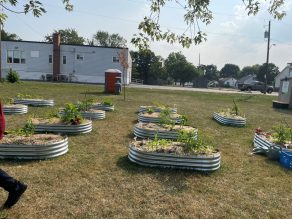
- Working with the Institute for Better Health, part of Trillium Health Partners, and the Black Health and Social Services Hub, the City supported an intergenerational garden in Malton. The project is connecting Black older adults and youth through gardening, cultural connection, and shared learning; the initiative continues in 2026.
Food security and youth empowerment
- The Seed Library has distributed more than 18,500 packets.
- The Malton Youth Hub provides meals for more than 400 youth.
Community awareness and support
- Working alongside community partners and the University of Toronto, the City supported Diabetes Connect, a model for community-based screening, education and connections to care in 2025, with expansion continuing for 2026.
Active living across the lifespan
- With a $25,000 grant from the Ontario Ministry for Seniors and Accessibility, a Volunteer Committee of 14 seniors helped develop the Get Outside Guide for Older Adults to engage older adult residents in outdoor recreation and social opportunities using City parks, trails and other outdoor amenities. The Guide supported 143 activities by 26 groups, engaging more than 1,800 participants, with a launch event attracting more than 500 residents.
Why it matters
In some Mississauga neighbourhoods, type 2 diabetes ranges from 13 to 16.9 per cent, exceeding the Ontario average of 9.8 per cent. The Healthy City Strategy addresses these disparities by focusing on broader social, environmental and economic factors, including access to healthy food, green space, transportation and community connection.
Looking ahead
Over the coming year, the City will continue advancing the Healthy City Strategy’s 25 actions and develop updated performance measures for 2026 and beyond. This work will incorporate meaningful indicators and research from the University of Toronto’s Population Health Analytics Laboratory to help ensure initiatives remain measurable and tailored to community needs, so that Mississauga remains a place where people of all ages can live healthy, active, and connected lives.
Quotes
“Mississauga is committed to making it easier for residents to live healthy, active lives. Our Healthy City Strategy makes a difference every day in people’s lives. I am proud that thousands of seniors participate in our 65+ Fit membership that eliminates fees and reduces barriers to wellness. We also lead the way with children’s healthy development with the free “Play in the Park” program providing recreational activities including organized games, sports, crafts, theme days, and special events. We are building a city where everyone can thrive.”
– Mississauga Mayor Carolyn Parrish.
“The progress of Mississauga’s Healthy City Strategy reflects the power of community-driven partnerships. By bringing together researchers, community organizations, and the City, we are supporting made-in-Mississauga solutions that reduce barriers, engage diverse communities, and advance system-level changes to support better health.”
– Tiffany Bartlett, Director of Research Programs, Operations and Partnerships, University of Toronto Novo Nordisk Network for Healthy Populations
About the Healthy City Strategy
Recognizing the growing impact of chronic disease, particularly type 2 diabetes, on residents across Mississauga, the City joined Cities for Better Health (CBH – formerly Cities Changing Diabetes) in 2021. With the support of CBH partners and input from the community, the City worked to develop the Healthy City Strategy, which was unanimously adopted by Mississauga Council in 2024. The strategy aims to work with partners to help create a healthier community and provides staff and decision makers with a health equity lens to guide City programs, policies, initiatives, and infrastructure.
Tags
Media contact
City of Mississauga Media Relations
media@mississauga.ca
905-615-3200, ext. 5232
TTY: 905-896-5151
Get email updates