Scoop that poop: Your dog’s business is your business
Not picking up after your dog can harm others and could lead to a $180 fine.
City services | June 29, 2026
Owning a dog comes with many benefits, like companionship and better health. It also comes with important responsibilities, including picking up after your dog.
While this may seem like a small task, it has a big impact. In Mississauga, dog waste adds up quickly, with an estimated 16,000 tonnes produced each year. When it is not picked up, it can affect the environment, public health and the cleanliness of shared spaces. Many people think dog waste works as fertilizer, but this is not true. Depending on the health of the dog and its diet, its waste can contain harmful bacteria and parasites that affect soil, water and air.
Under City by-laws, dog owners must pick up after their pets on both public and private property. Not doing so can lead to fines of $115 under the Animal Care and Control By-law and up to $180 under the Parks By-law.
Pressures in a growing city
Mississauga is home to about 127,000 dogs – that’s a lot of poop. Dogs can produce waste up to three times a day, creating up to 381,000 waste bags daily. Over the course of a year, that could total up to 139 million bags. This makes proper disposal vital.
Dog waste that is not picked up can also attract wildlife, such as coyotes and rodents, which could create public safety concerns.
Not all poop is created equal
Wild animals like coyotes, foxes and squirrels eat food from their natural environment. When they leave waste behind, those same nutrients return to the ecosystem in a balanced way.
Most dogs, however, eat processed pet food that is high in nutrients. When dog waste is left on the ground, it adds extra nitrogen and phosphorus to soil and water. These nutrients build up and cause problems, like invasive plant species, toxic algae in waterways and reducing biodiversity.
As dog waste breaks down, it releases methane, a greenhouse gas that contributes to climate change. It can also contain harmful bacteria and parasites, such as E. coli, Salmonella, Giardia and roundworm, which can make people, pets and wildlife sick.
When it rains, dog waste left on the ground washes into the City’s stormwater system and flows into creeks, rivers and Lake Ontario. This can harm wildlife, make water unsafe for swimming and increase the cost of treating drinking water.
Keeping parks and neighbourhoods clean
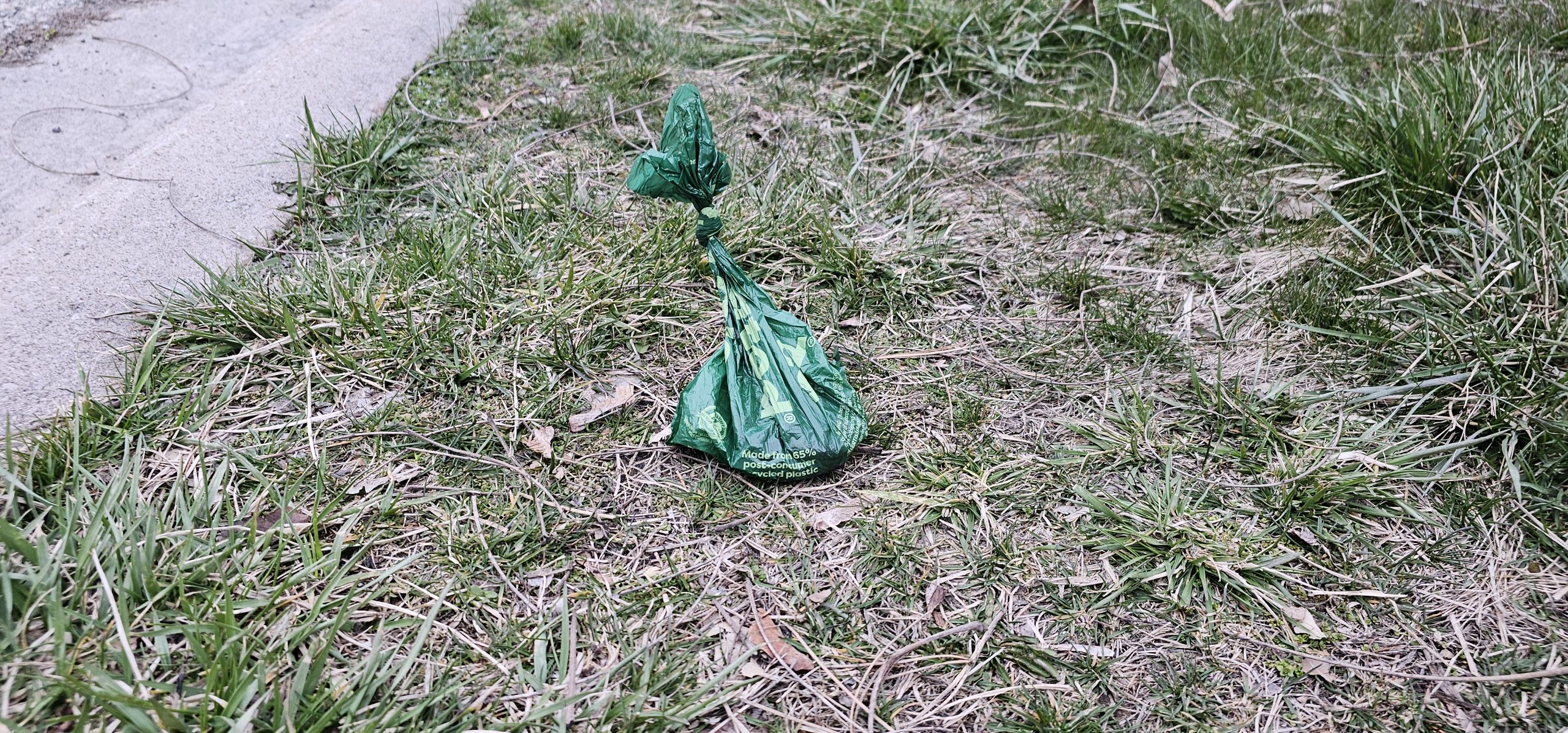
City crews empty about 1,900 waste containers in parks and on trails every week. Even with regular service, some dog owners leave waste bags beside full bins, in trees and bushes, or do not pick up after their dogs at all. This creates litter and adds extra work for staff.
If you are out walking your dog and notice a dog waste bin is full:
- Do not leave the bag on the ground or beside the bin.
- Use another nearby bin or take it home.
- Report the full bin by calling 311.
Supporting proper dog waste disposal
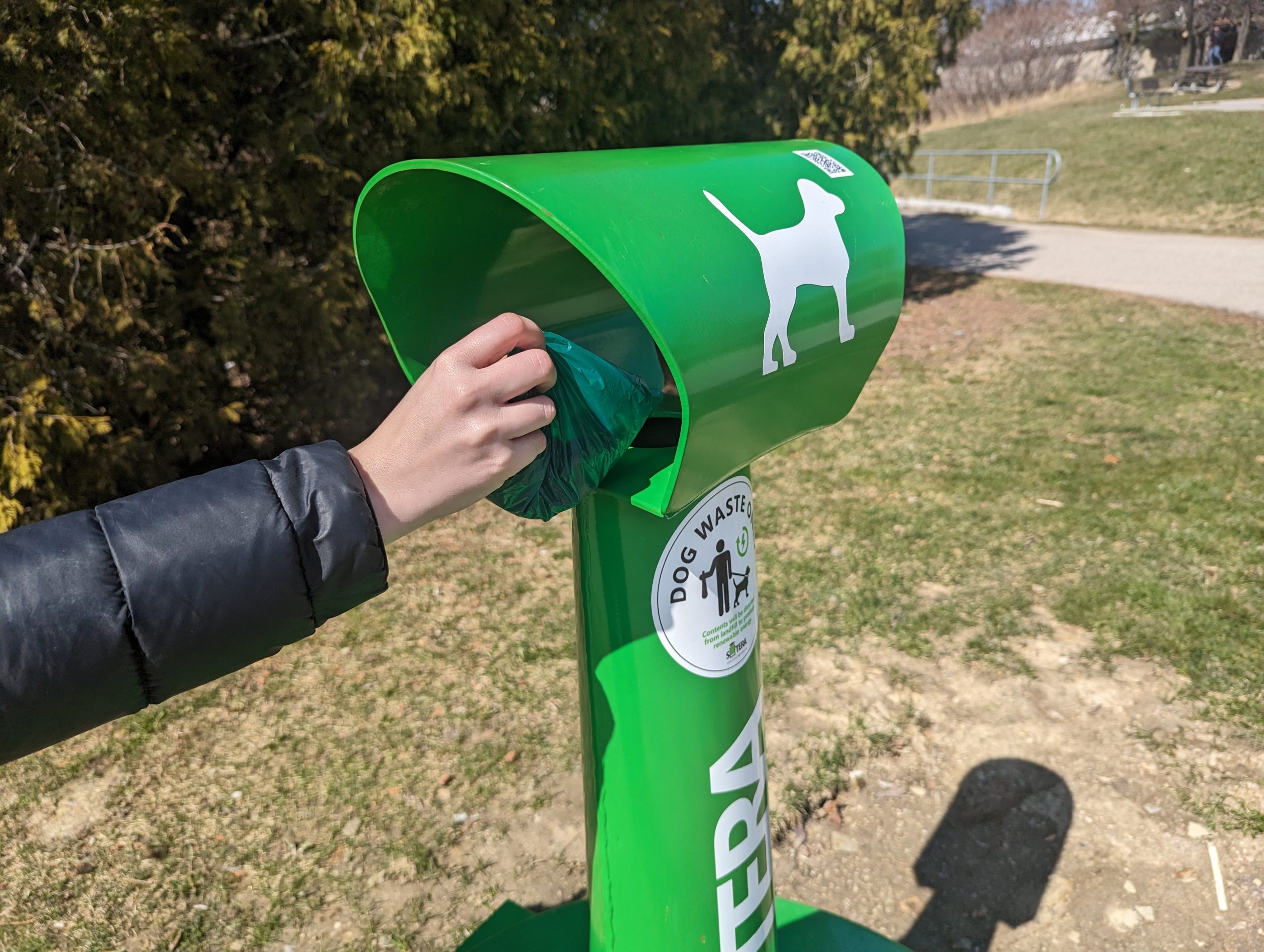
The City continues to make it easier for residents to dispose of dog waste properly. In 2023, the City launched a Dog Waste Pilot Program with Sutera Inc. to install in-ground dog waste containers at 34 locations across Mississauga. These include Jack Darling Park, River Grove Park, Churchill Meadows and more. The containers store waste below the ground, where it stays cooler and produces less odour. Each unit can hold waste for up to four weeks.
Since the start of the pilot, close to 140,000 kilograms of dog waste has been kept out of landfill and sent to a facility where it is turned into energy. That’s roughly half a million dog waste bags diverted.
Download the Sutera app on Play Store or Apple Store to find nearby dog waste containers and plan your walking routes.
Disposing of dog waste at home
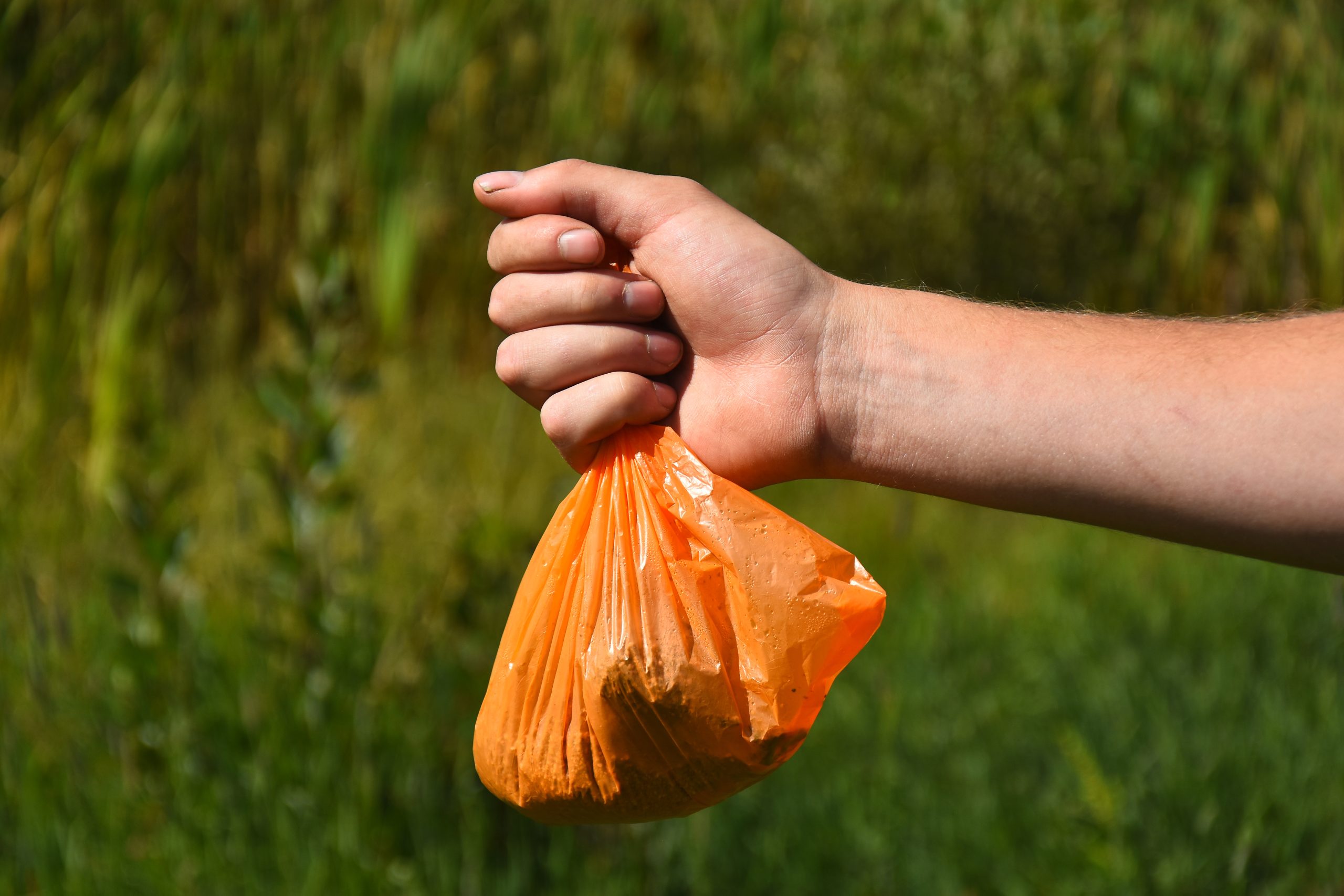
Dog waste should be placed in a tied bag and thrown in the garbage. Do not put it in recycling or green bins. Dog waste in recycling bins can contaminate entire loads, causing them to be sent to landfill instead.
Small actions, big impact
Picking up after your dog helps protect the environment, keeps parks clean and makes shared spaces safer for everyone.
Your dog’s business is your business, so make sure you pick it up every time. To report concerns or request cleanup in a specific area, contact the City by calling 311.
Tags
Media contact
City of Mississauga Media Relations
media@mississauga.ca
905-615-3200, ext. 5232
TTY: 905-896-5151
Get email updates