Mississauga’s grazing goats are chewing their way through invasive plants species
Mississauga found a baaa-rilliant way to manage invasive plants using goats, as natural grazers.
Environment | July 11, 2025
While other Ontario cities are just now chewing on the idea, Mississauga led the herd in May 2024 as the province’s first municipality to use goats as natural lawnmowers to control invasive plant species like buckthorn, phragmites and reed canary grass—non-native invasive species that threaten local biodiversity. This year, the goats are back for more and have already begun grazing. They’ll continue grazing for the next couple of days, before coming back for more when the season starts to change.
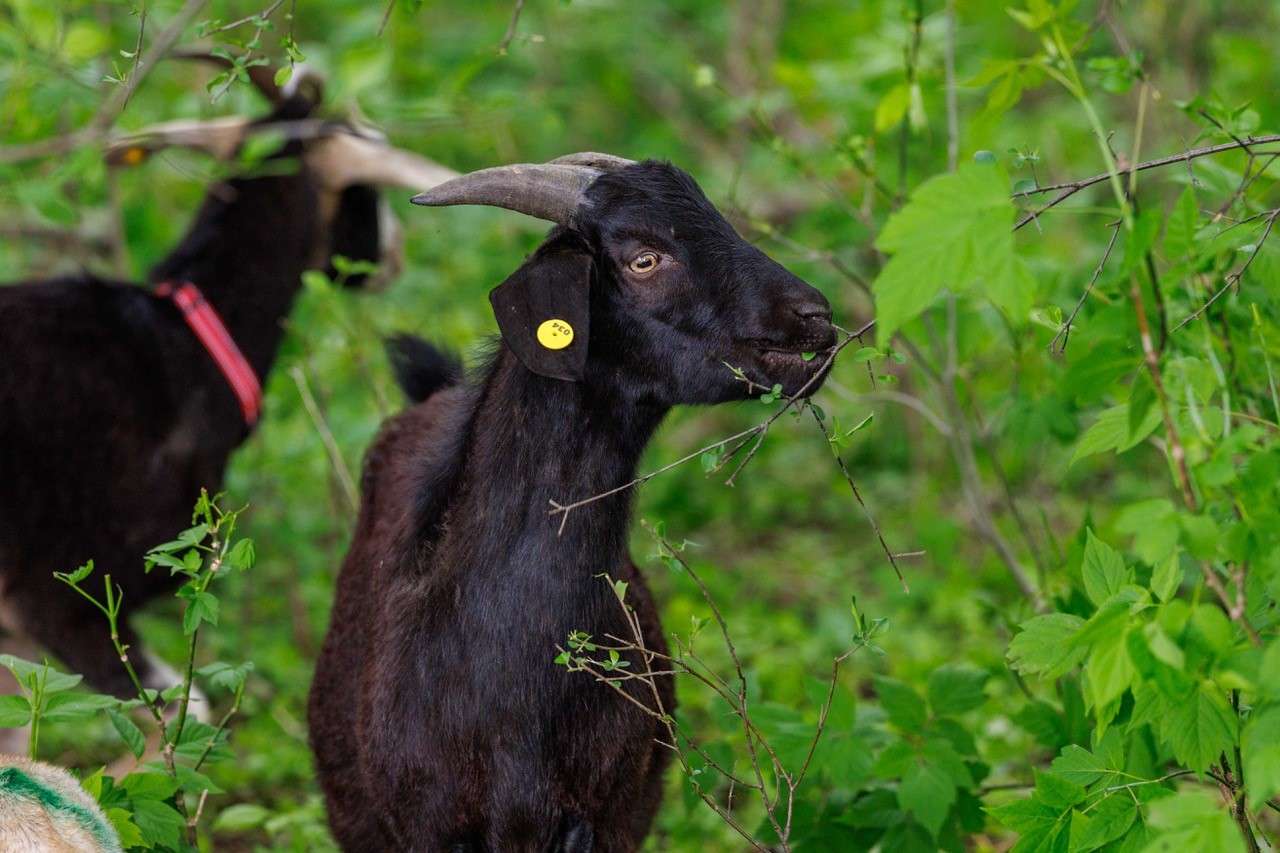
The herd is baaack
To be part of the program, goats must be over one year old and healthy, as they travel to sites. Goats can be on site from one day to a whole week depending how big the grazing area is, and which species are being targeted. Each graze is timed and rotated to avoid overgrazing and to allow native plants a chance to recover.
Goats naturally have an appetite for many of the priority invasive plants growing in Mississauga. Another added benefit is that goat’s hooves also aerate the soil. By walking around, the movement from their hooves help improve soil structure, helping aerate the ground.
For health and safety reasons, the goats will only be on site in appropriate weather conditions. The goat herds are also monitored by professional herders and protected by portable fencing, so there’s nothing for residents to be concerned about.
Grazing and leading the way
Goat grazing is primarily being used to support Mississauga’s Invasive Species Management Plan. Mississauga implemented prescribed goat grazing in spring 2024 and was the first city to do so in Ontario. Since then, other municipalities have followed through prescribed goat grazing, making Mississauga a leader when it comes to invasive species control. The City follows best management practices for invasive species control and ecosystem management but is also committed to an adaptive management approach as more knowledge and methods become available.
Failing to control invasive species can lead to ecological consequences. Invasive species can outcompete native plants and animals, disrupt ecosystems, damage infrastructure, reduce property values, and even threaten human health.
Controlling invasive species requires consistent, year-after-year effort due to their prolific seed banks and aggressive growth. This year, the goats kicked off their grazing by visiting O’Connor Park, Totoredaca Park, King’s Park and Hewick Meadows to support invasive species management and ecological restoration at each site. City staff will be monitoring the regrowth of target species after the first graze to determine if goats should visit a second time, with the second grazing occurring in late summer or early fall. In terms of progress, the City’s forestry team is pleased to share that since 2024, the goats have grazed almost two acres of land.
The grazing initiative is part of Mississauga’s broader environmental strategy using non-chemical solutions for land management. Goats offer a low-impact alternative to herbicides or machinery, making them ideal for hard-to-reach or environmentally sensitive areas.
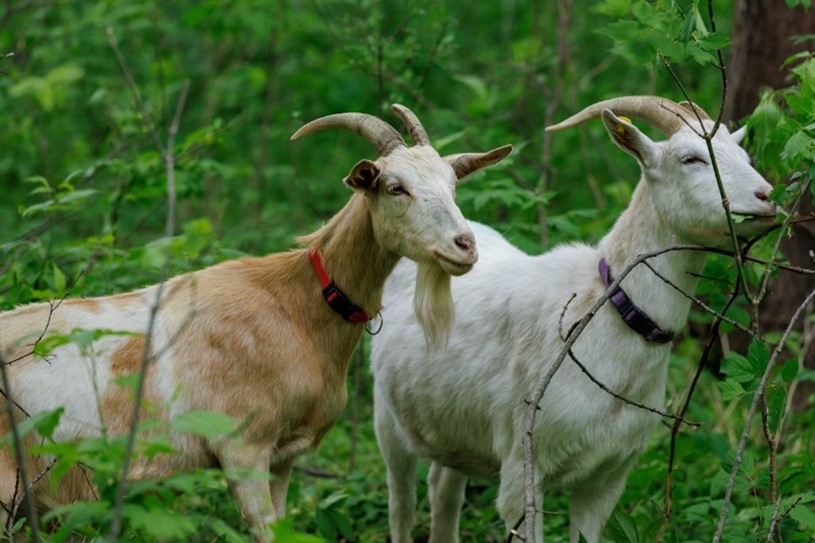
The bigger picture
Goat grazing not only supports healthy ecosystems but also sparks interest and creates important conversations about biodiversity in Mississauga. Mississauga’s Forestry team will continue to track the progress of the scheduled grazes and will plan future initiatives accordingly.
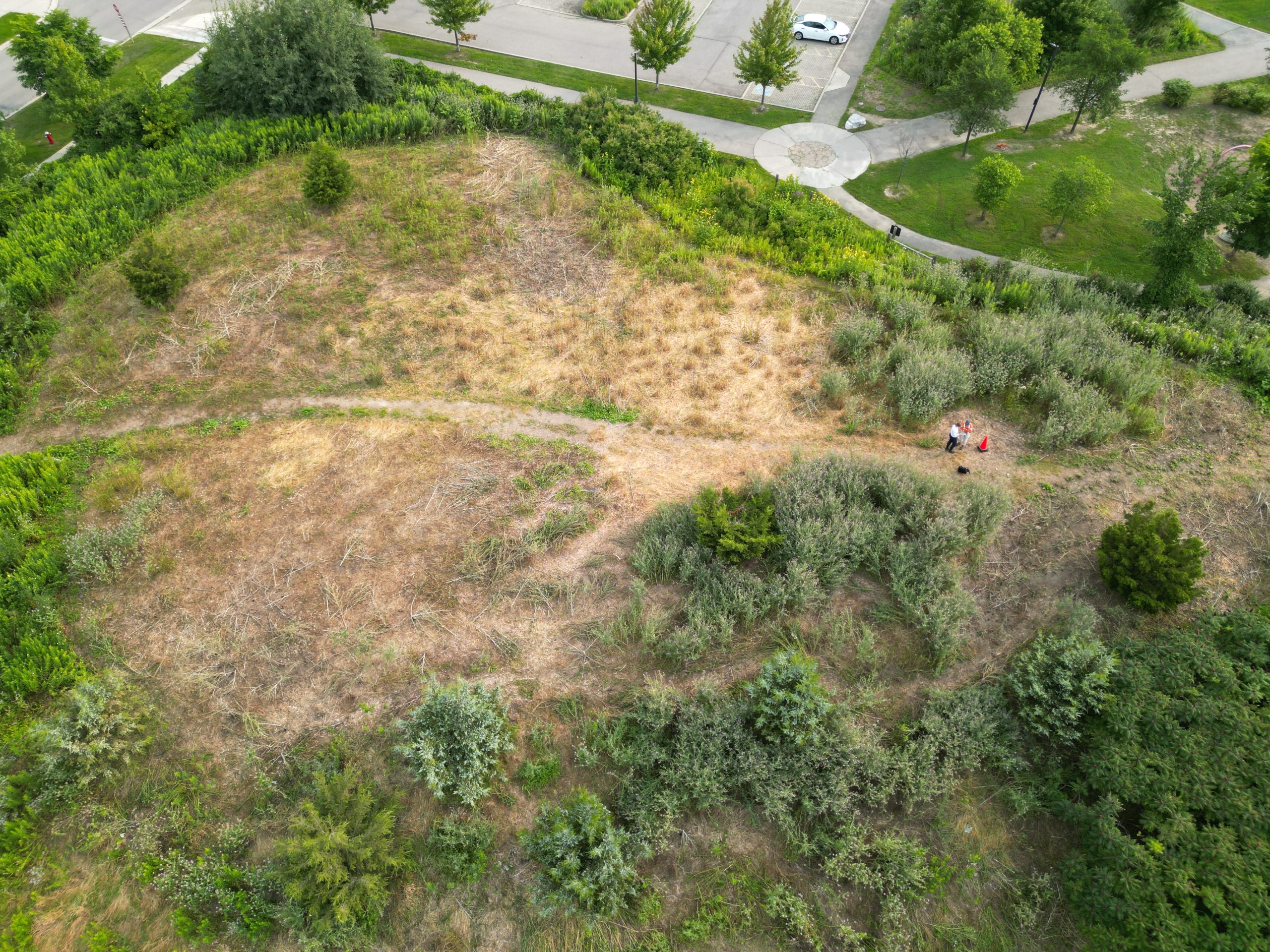
Learn more about invasive species
The City’s Invasive Species Management Plan and Implementation Strategy guides the management of priority invasive species in priority natural areas across Mississauga. Initiatives like goat grazing directly support Mississauga’s goals to build a more resilient, low-carbon city. Learn more on the city’s website.
Tags
Media contact
City of Mississauga Media Relations
media@mississauga.ca
905-615-3200, ext. 5232
TTY: 905-896-5151
Get email updates