Whatever winter sends our way, City crews are ready
Mississauga's winter operations team is available 24/7 to keep roads, sidewalks, bus stops and bike routes safe and ready for travel this winter.
City services | November 4, 2026

As winter approaches, the City of Mississauga is ready to tackle ice and snow using whatever it takes, from salt brine to sidewalk and windrow plows, making sure everyone can move safely throughout the season.
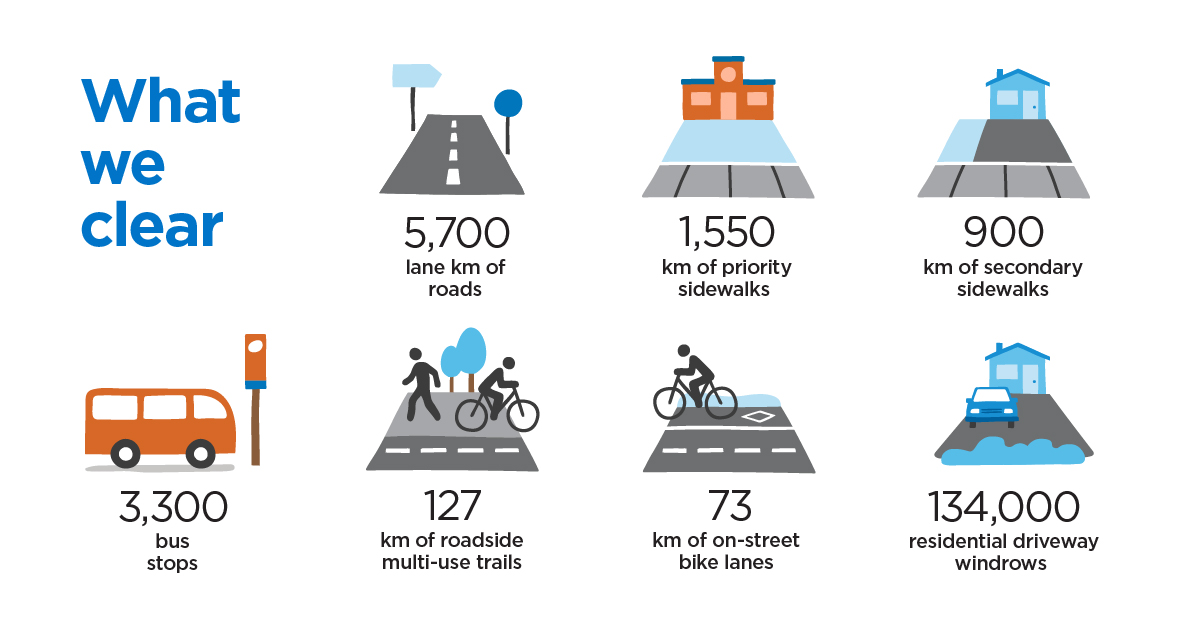
What we clear
Operations crews are ready 24/7 when the winter weather hits. The City takes care of more than:
- 5,700 lane kilometres of roads
- 1,550 kilometres of priority sidewalks
- 900 kilometres of residential sidewalks
- 3,300 bus stops
- 27 kilometres of roadside multi-use trails
- 73 kilometres of bike lanes
- 134,000 windrows at the bottom of residents’ driveways.
The winter maintenance team responds to the most important winter maintenance needs first. That means clearing major roads, high-use sidewalks, transit routes, bus stops, emergency routes and pedestrian crossings. This helps keep critical routes open and supports the safe movement of emergency vehicles throughout the city. Sidewalks in front of homes are cleared after the snowfall has stopped.
When we clear it
Major roads, bus stops and priority sidewalks are cleared within 12 to 24 hours after a snowfall ends. Residential roads and sidewalks are cleared within 24 to 36 hours. Major winter storms and back-to-back weather events may need longer service times.
Changes to citywide winter parking restrictions
The City may declare a Citywide Winter Parking Restriction to help crews clear snow safely and efficiently.
When a Citywide Winter Parking Restriction has been called, parking on city streets is not allowed. Temporary and residential paid parking permits are also suspended during the restrictions. Beginning this winter 2026-2027, this also applies to vehicles parked in 15-hour parking exemption zones. Vehicles left on the road are subject to a $150 fine and may be towed.
Cars and other vehicles parked on streets can stop crews from properly clearing roads and driveway windrows. This makes it harder for emergency vehicles, buses and people to travel safely.
Expanding the Low Road Salt Strategy
The City is building on its Low Road Salt Strategy. This approach helps limit the effects of road salt on waterways, plants and infrastructure while keeping roads and sidewalks safe.
The winter operations team already uses various salt management practices, including anti-icing brine, treated salt, proactive plowing and advanced weather monitoring to improve winter maintenance while reducing salt use.
In 2026, the City will expand the use of anti-icing brine to 20 per cent more roads. This is expected to reduce salt use by up to 650 tonnes a year. The City will also start plowing snow earlier on select major roads, which could bring down salt use by 3,450 tonnes a year. Together, these measures are expected to reduce road salt use by up to 4,100 tonnes annually while maintaining safe travel conditions.
The program currently covers approximately 1,260 lane kilometres of roadway, which is about 63,000 litres of salt brine for each application. This proposal expands the anti-icing program by about 20 per cent or 250 lane kilometres of roadway.
Windrow clearing continues citywide
Residential driveway windrow clearing will continue across the city this winter for many homes.
A windrow is the pile of snow left at the end of driveways after roads have been plowed. The City clears a minimum three-metre opening in eligible driveway windrows after the street has received its final round of plowing. Residents do not need to register or apply for the service.
Last winter, crews cleared approximately 134,000 residential driveway windrows, helping improve accessibility and reduce the amount of snow residents need to clear.
When a citywide winter parking restriction is declared, move your vehicle off the street. If you temporarily park at the end of your driveway, be sure to move your vehicle before windrow clearing begins. Leave at least a three-metre space at the end of your driveway for windrow clearing.
While parking on the lower boulevard is permitted during a Winter Parking Restriction, parked vehicles in the boulevard portion of a driveway will result in the windrow not being cleared.
Stay informed, keep Mississauga moving
Residents can support safe and efficient winter operations by:
- Removing parked vehicles from the road when a Citywide Winter Parking Restriction is declared.
- Signing up for parking restriction alerts and City notifications.
- Using the Snow Plow Tracker to monitor winter maintenance activities.
- Moving vehicles, basketball nets and other obstructions away from roads and sidewalks.
- Placing waste containers where they do not interfere with snow-clearing operations.
- Giving snow-clearing equipment plenty of room to operate.
- Allowing extra travel time during winter weather events.
Residents can find winter maintenance information, track snow-clearing operations and learn more about winter parking restrictions at mississauga.ca/snow or by contacting 311.
Quote
“Our teams are prepared to respond around the clock to deliver winter maintenance operations across the city. From roads and sidewalks to bus stops, trails, bike lanes and residential driveway windrows, we are focused on delivering timely and reliable service while helping residents travel safely and confidently during winter weather.” – Helen Noehammer, Director, Works Operations and Maintenance
Digital assets and downloads


Download assets from Works Operations and Maintenance
Tags
Media contact
City of Mississauga Media Relations
media@mississauga.ca
905-615-3200, ext. 5232
TTY: 905-896-5151
Get email updates